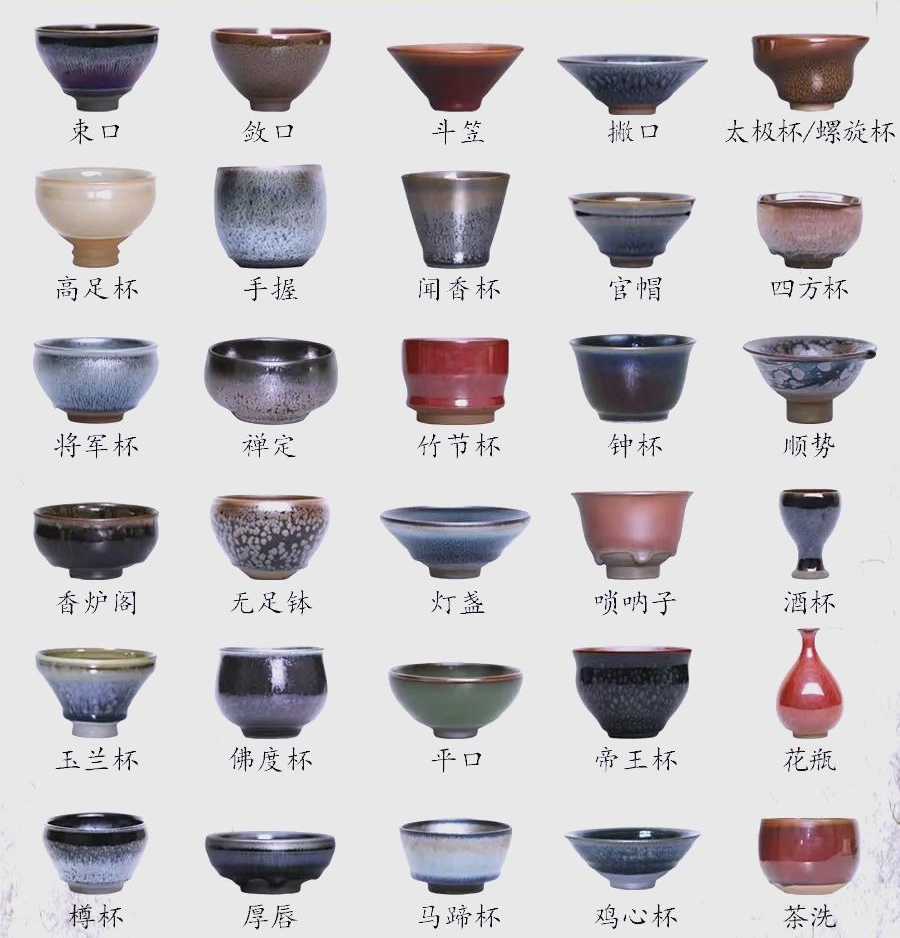
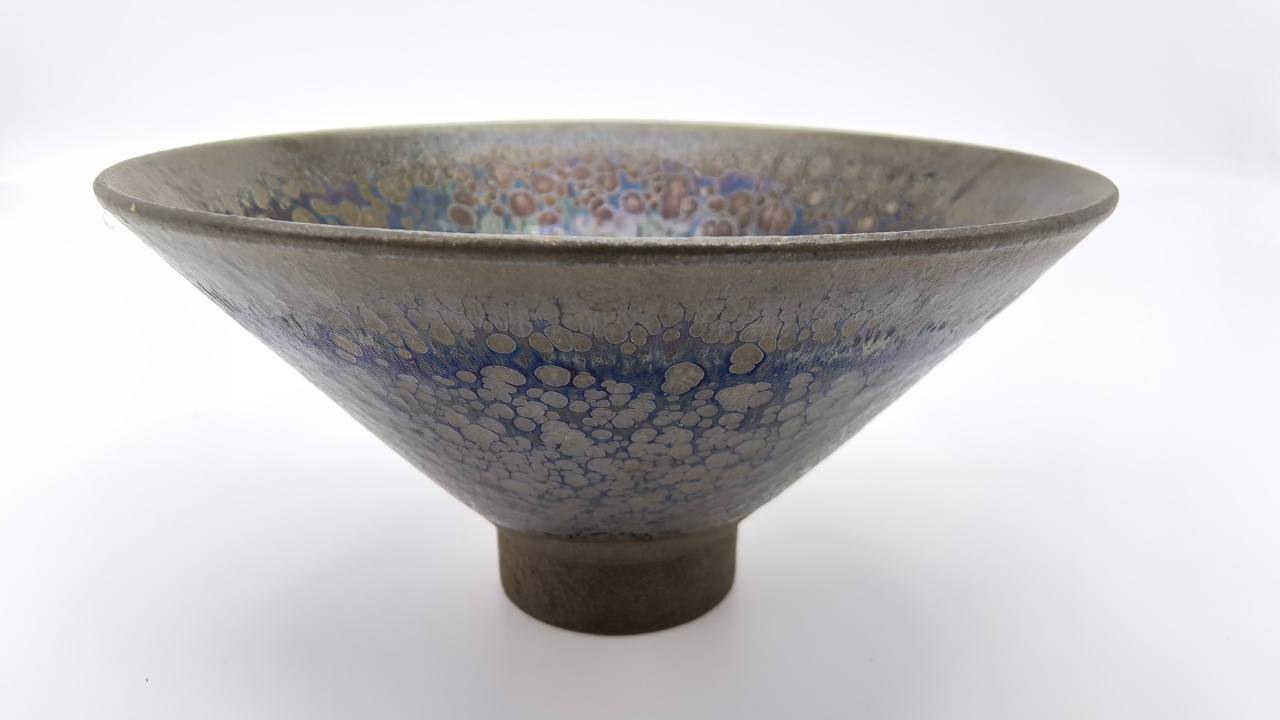
The beauty of Jian Zhan lies not only in its mesmerizing and mysterious glazes but also in its classic, substantial, and elegantly proportioned forms.
A well-executed shape enhances the tea drinking experience and is a crucial aspect of what makes a fine Jian Zhan worthy of collection and appreciation.
Below, we explore the traditional shapes of Jian Zhan from Nanping, Fujian—a craft recognized as a Chinese Intangible Cultural Heritage and protected under geographical indications—and discuss how to appreciate their aesthetic appeal.
I. Traditional Shapes
Traditional Jian Zhan shapes share a common characteristic: a wide mouth, a narrow foot, and a silhouette resembling an inverted funnel.
The outer contour of the bowl shows a balanced curve—slightly narrowing at the rim, swelling gently at the belly, and tapering elegantly toward the base. This harmonious structure gives Jian Zhan its graceful, refined, and dignified appearance.
To appreciate a traditional Jian Zhan form, observe:
Whether the lines flow smoothly
If the transitions between curves are natural
If the surface is even and polished
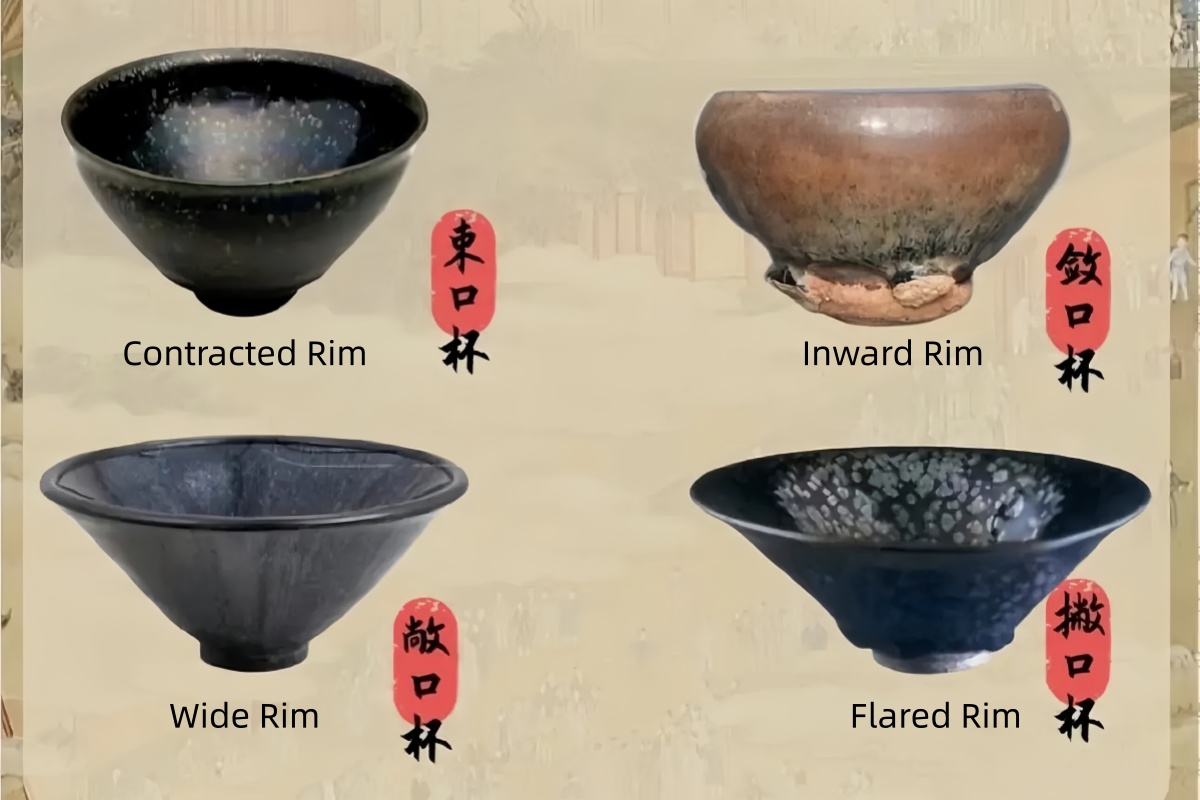
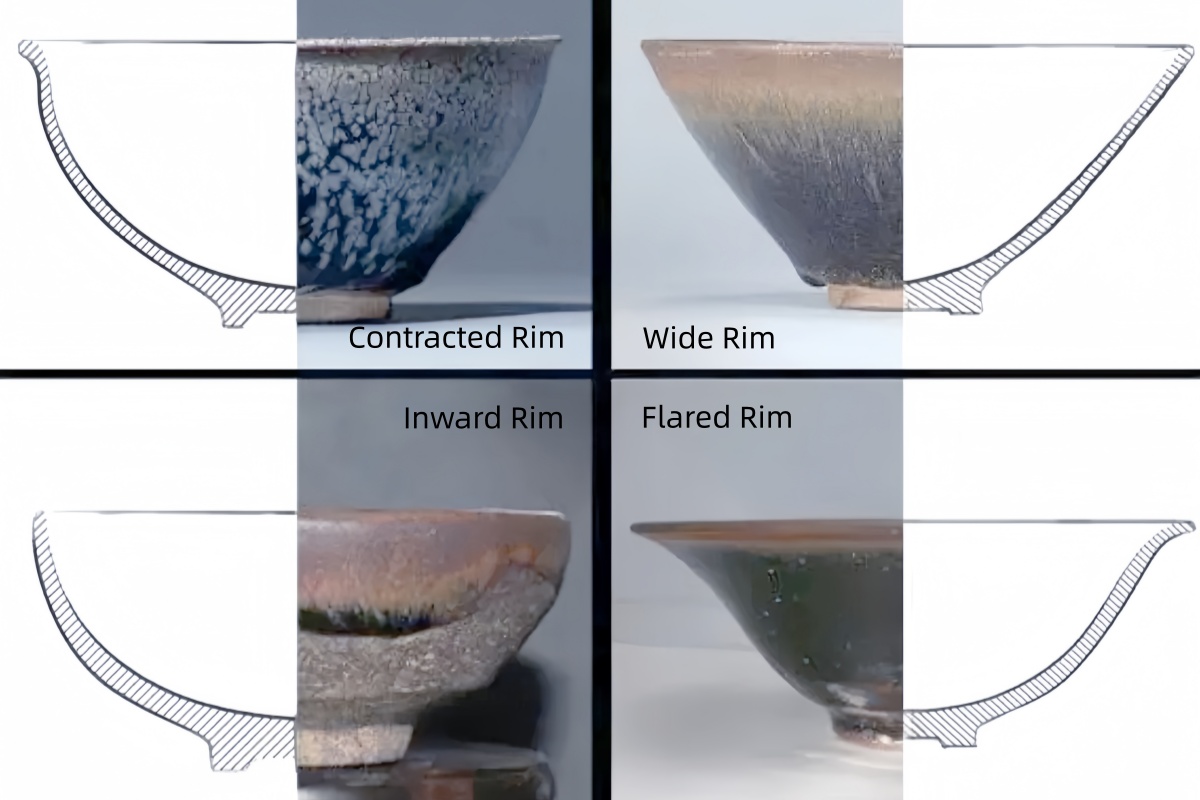
Based on variations in the rim, belly, and foot, traditional Jian Zhan can be classified into four main types:
1. Contracted Rim(Shu Kou,束口型)– Steady and Elegant
The Contracted Rim type features a distinctive folded rim. The outer edge turns inward, forming a subtle groove, while the inner wall forms a raised ridge—often called the “contraction line” or “water-fill line,” located about 1 cm below the rim. Historically, this helped Song Dynasty tea competitors measure tea liquor accurately and prevent spills.
This “contraction line” is the most recognizable feature of the Contracted Rim style and the reason it was widely imitated by other kilns during the Song Dynasty. Surviving examples show it was the most common shape produced at the Jian Kiln.
Appreciation points: position of the contraction line, curvature of the belly, neatness of the glaze cut-off line, artistry of glaze beads, and finishing of the foot.
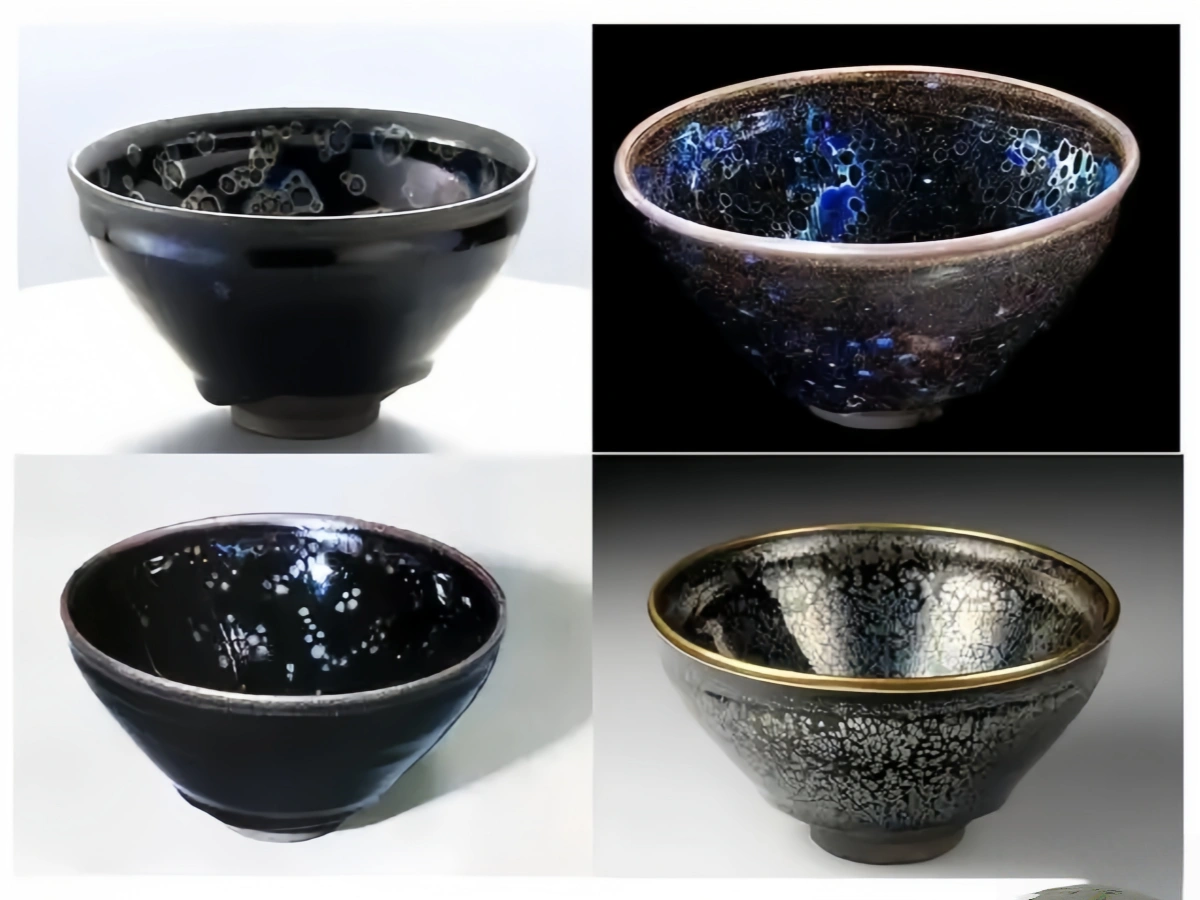 Japan's four national treasure Jian zhan are all Shu Kou cups.
Let's explore some of the world's most treasured Shu Kou bowls in museum collections.
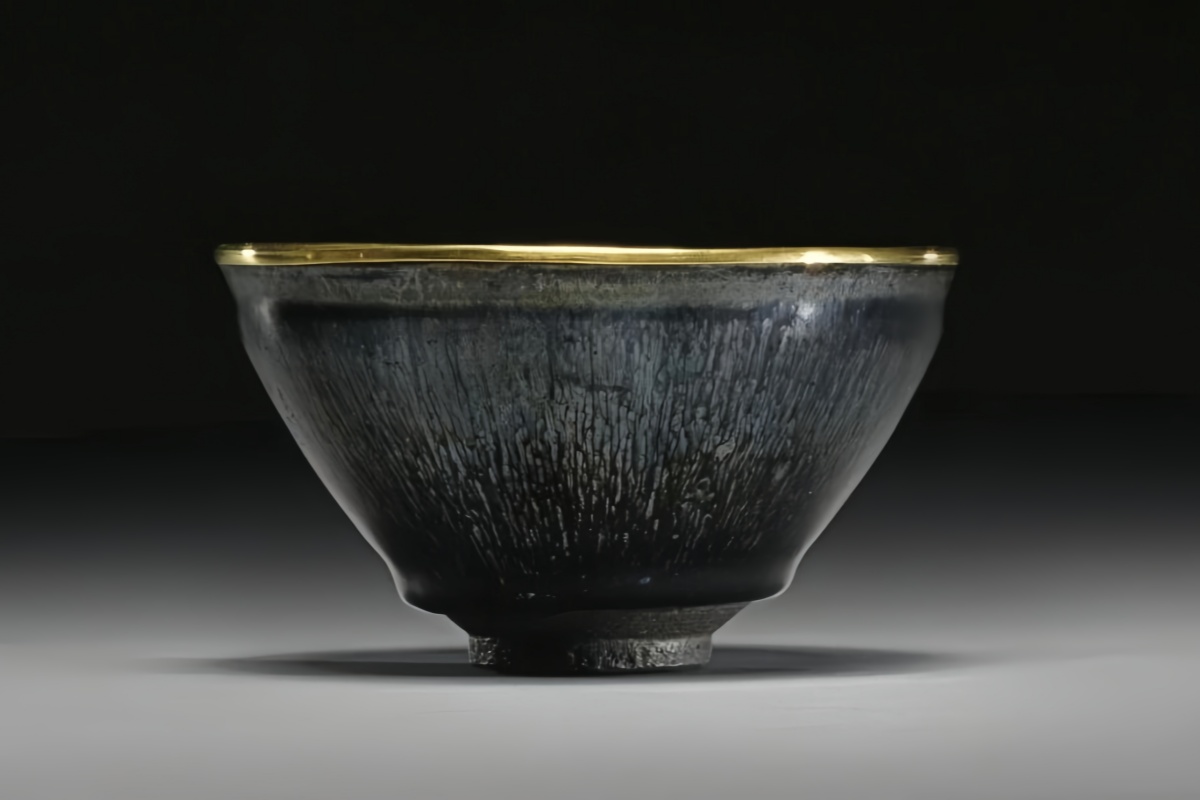 Southern Song Dynasty Jian Yao 'Silver Hare's Fur' Shu Kou Bowl(12.5 cm. Sold for £1,105,250 at Sotheby's London, 11 May 2011)
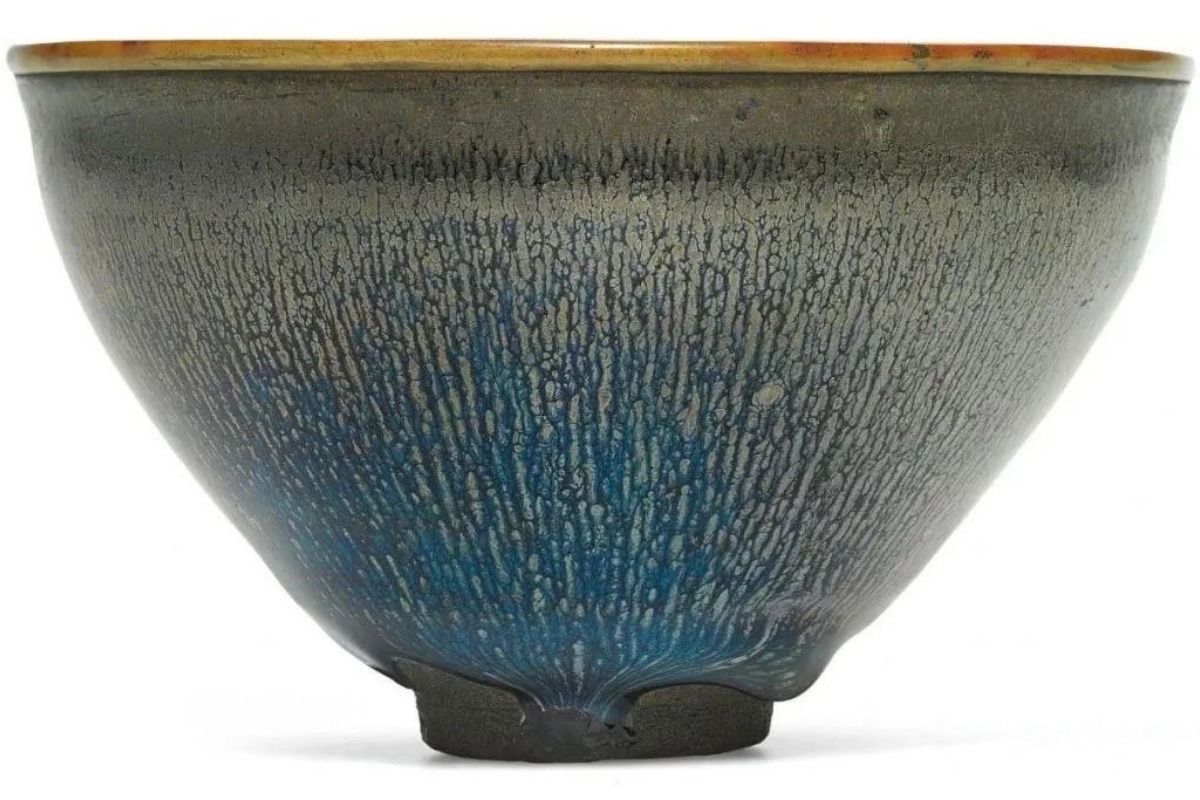
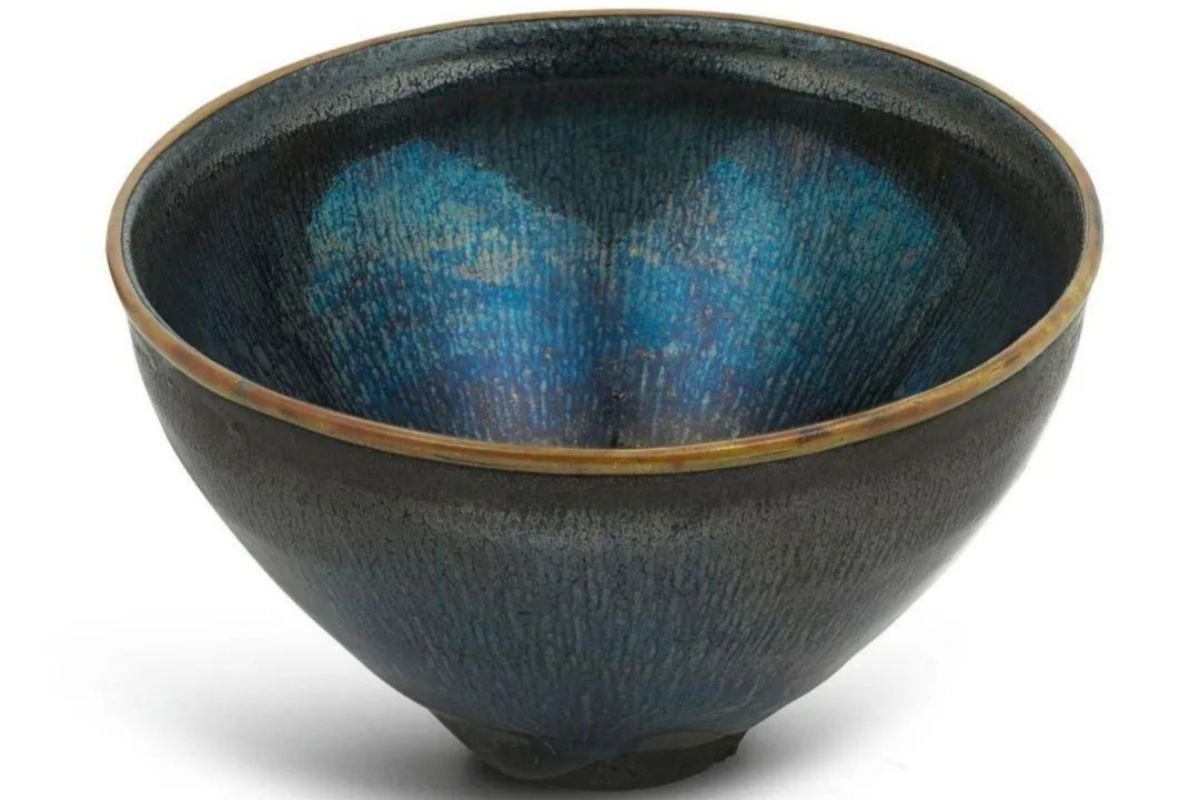 Southern Song Dynasty Jian Yao 'Silver Hare's Fur' Shu Kou Bowl(12.2 cm. Sold for £1,085,000 at Sotheby's London, 9 November 2016)
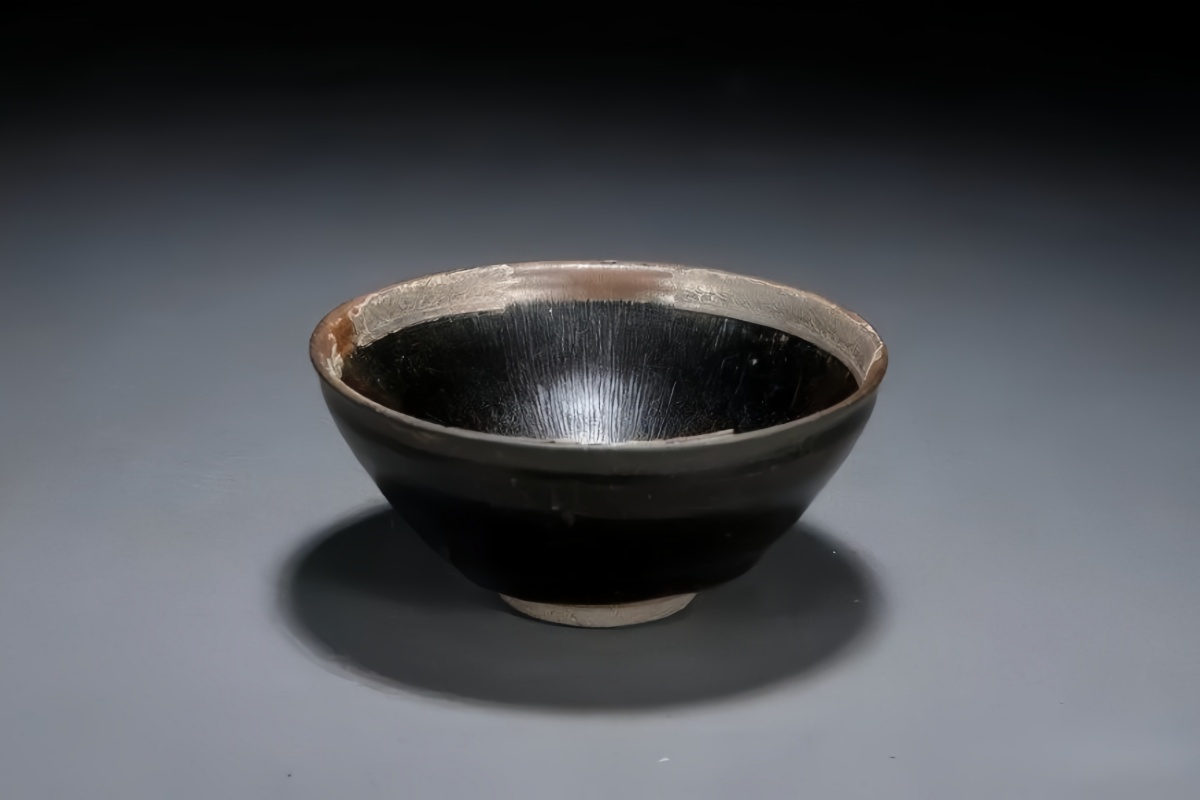 A Southern Song "Gong Yu" (For the Imperial Use) Jian Yao Teabowl with "Jade Hare's Fur" Glaze. 12.2×5.5 cm. Sold for RMB 5.98 million at Xiling Yinshe Auction, Dec 15, 2019.
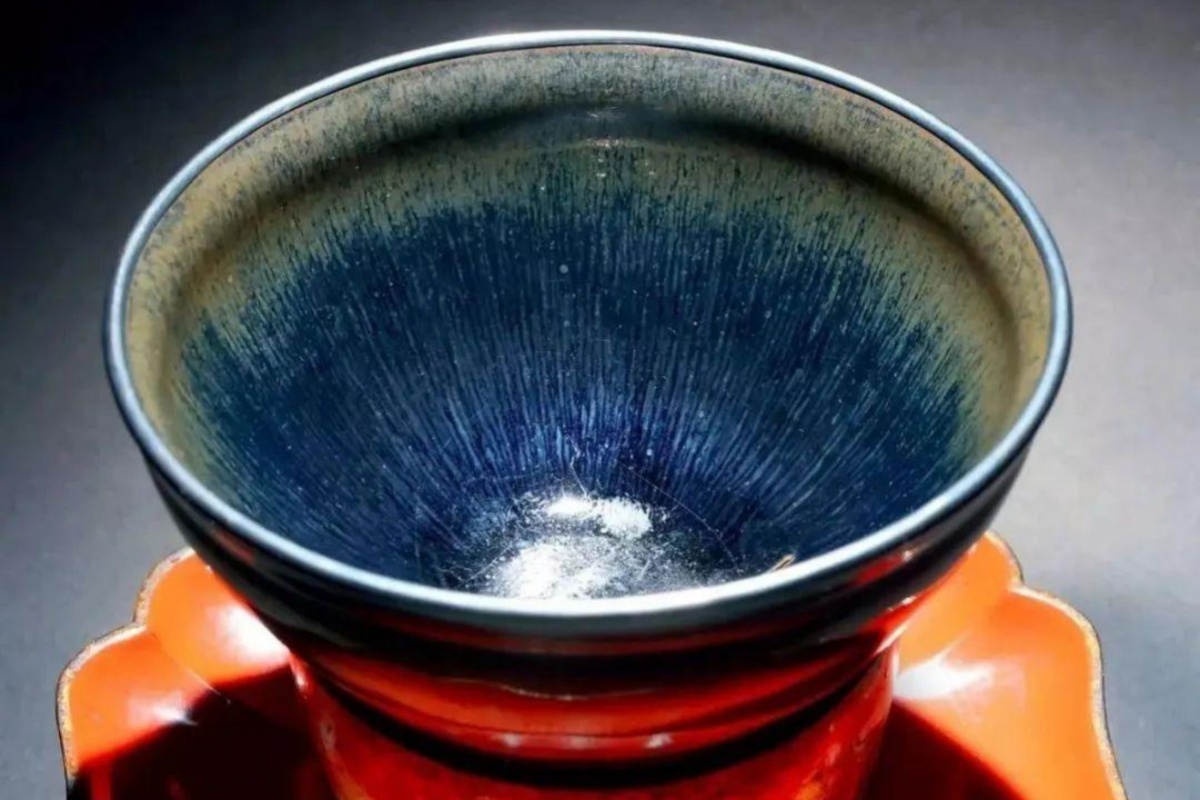
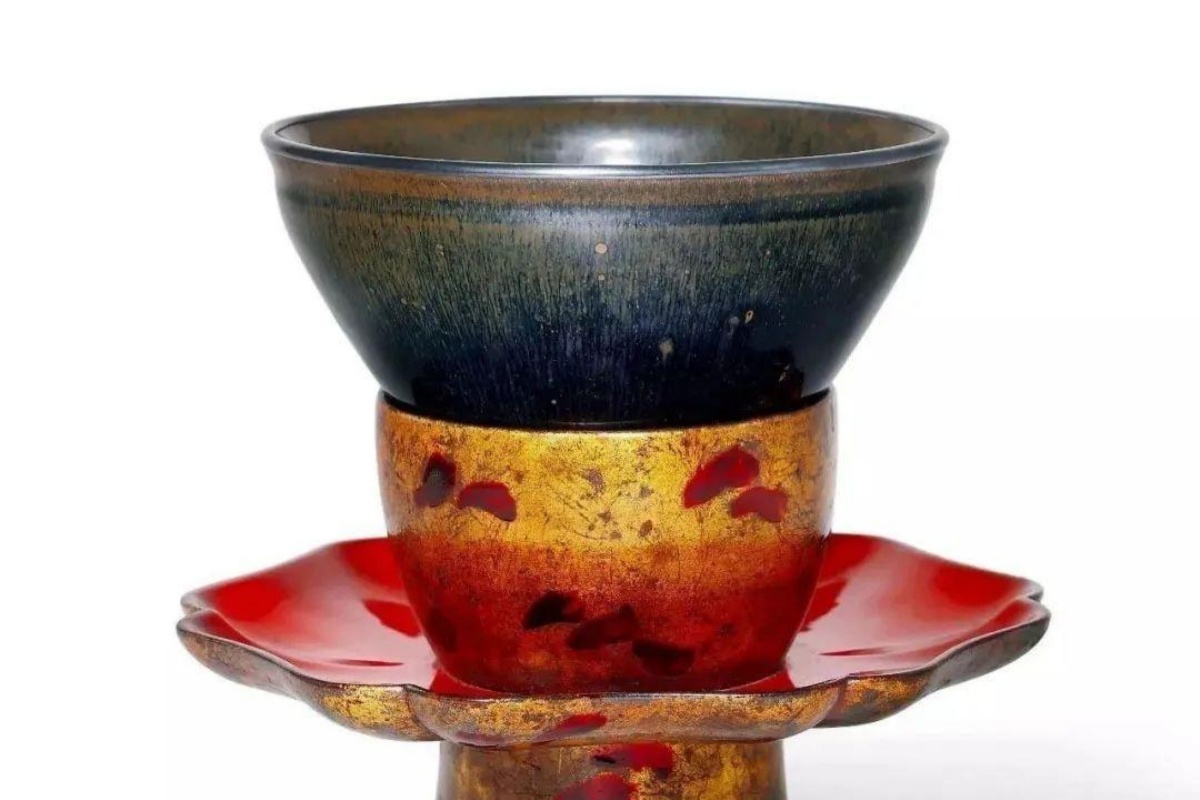
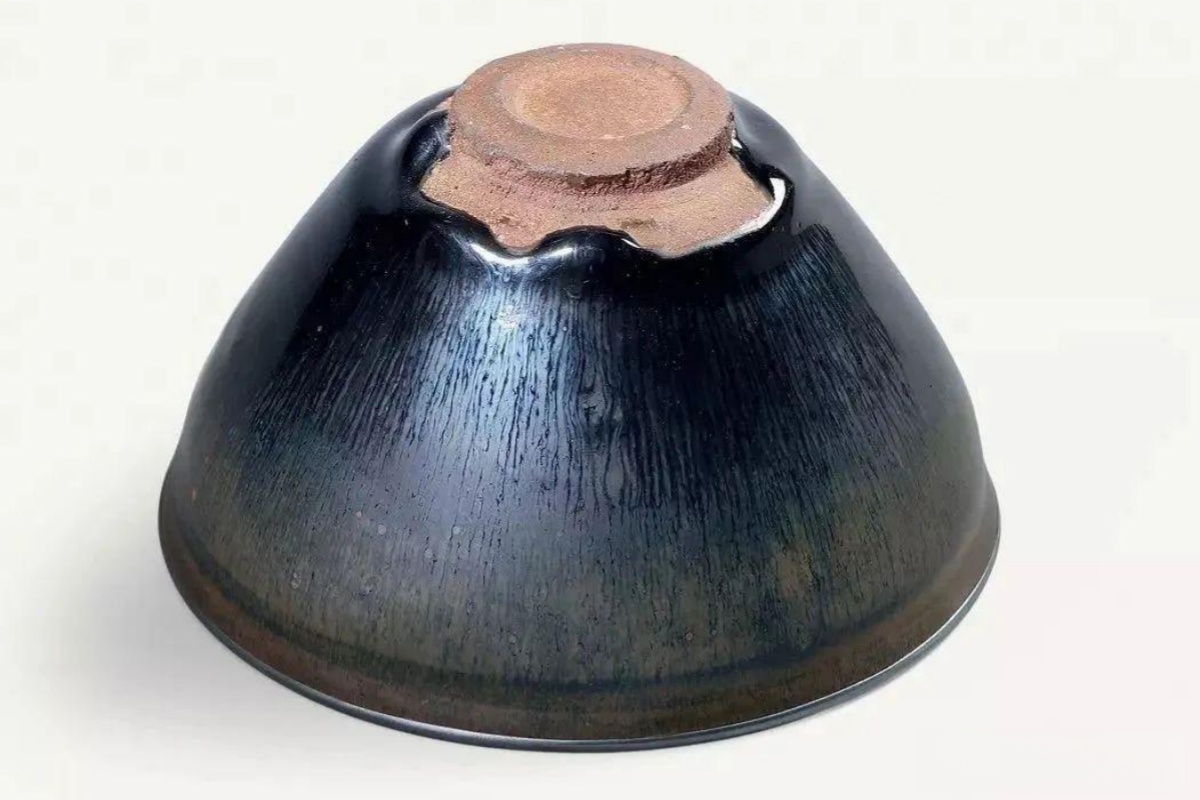 Song Dynasty Jian Kiln 'Hare's Fur' Shu Kou Tea Bowl(12.4 cm diameter, 4 cm base, 6.8 cm height. Sold for HKD 3 million at Guardian Hong Kong auction Oct 2, 2017)
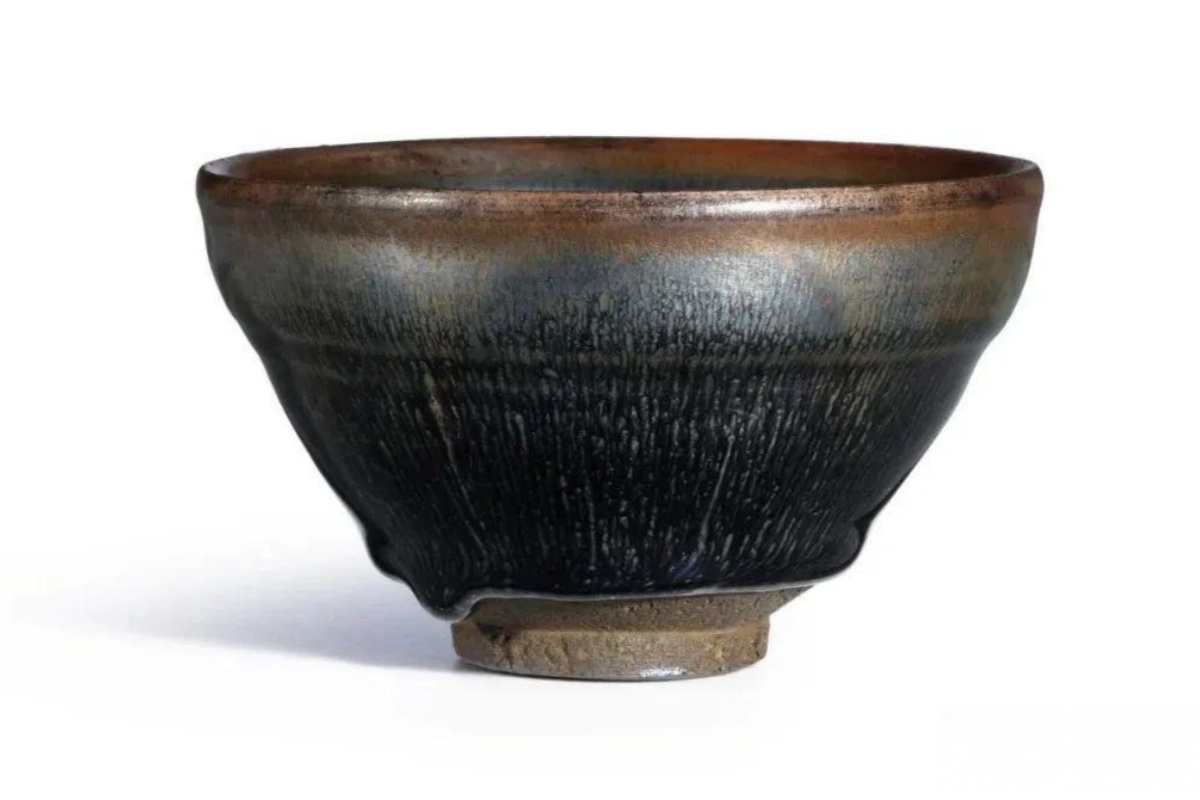 Southern Song Jian Kiln 'Hare's Fur' Shu Kou Tea Bowl(12cm,HK$3,080,000 at Sotheby's Hong Kong, April 5, 2015)
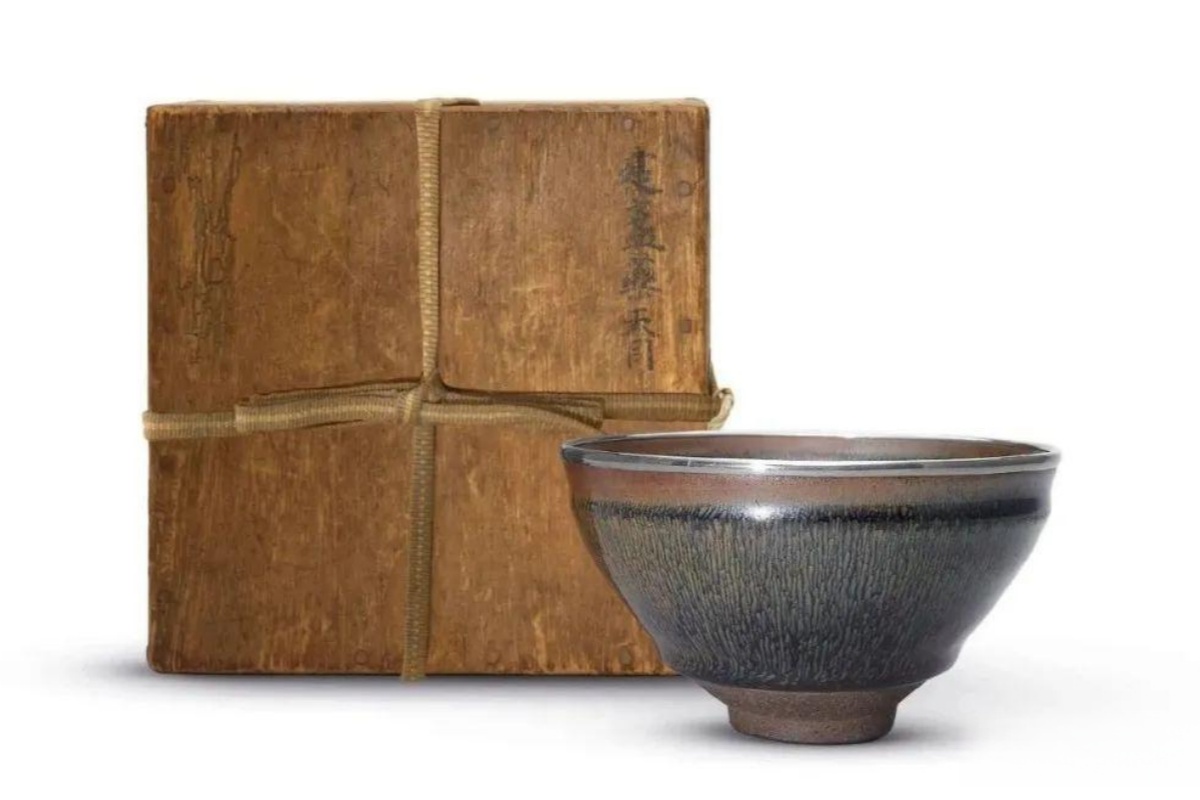 Southern Song Jian Kiln 'Hare's Fur' Shu Kou Tea Bowl(Sold for HKD 2,440,000 at Christie's Hong Kong, 2 December 2015)
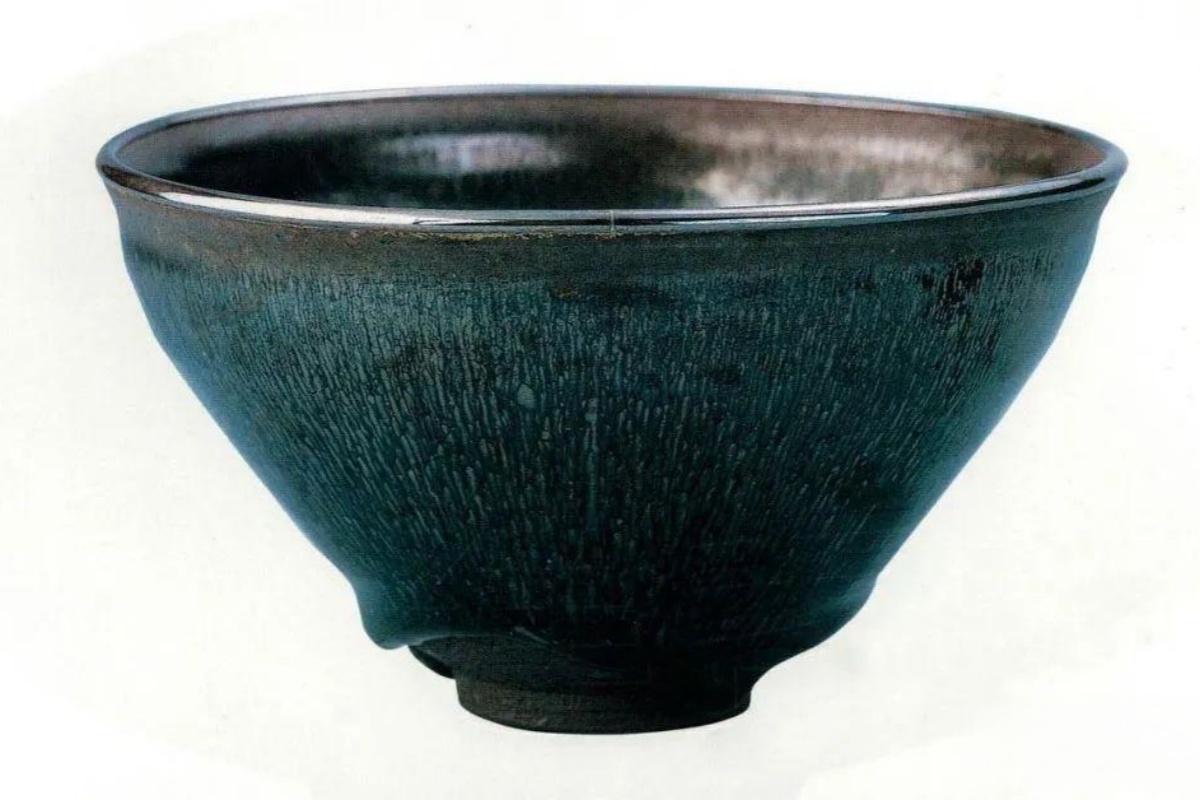 Song Dynasty, Jian Kiln Hare's Fur Tea Bowl(Mouth: 12.9cm, Height: 7.5cm, Base: 3.8cm,Hayashibara Museum of Art, Japan)
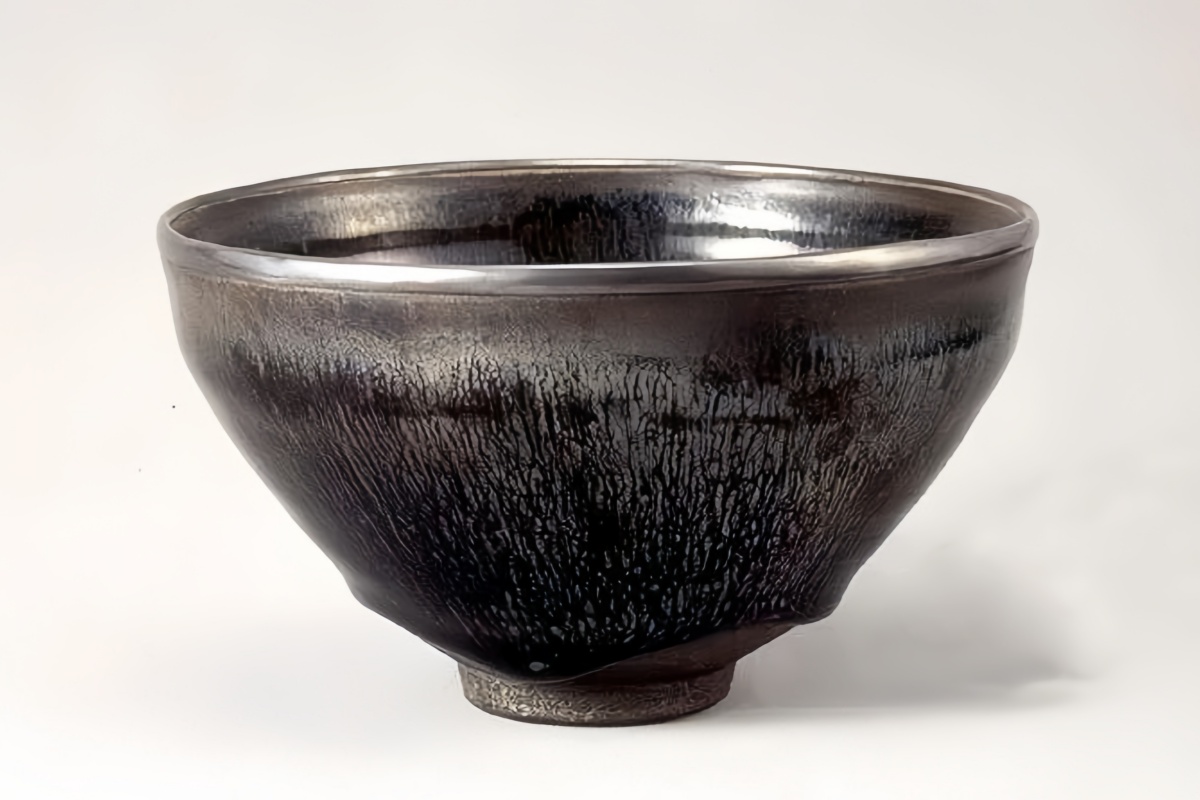 Song Dynasty Jian Kiln 'Hare's Fur' Tea Bowl (12.6×7.3×3.9 cm). Collection of the Seikado Bunko Library, Tokyo.
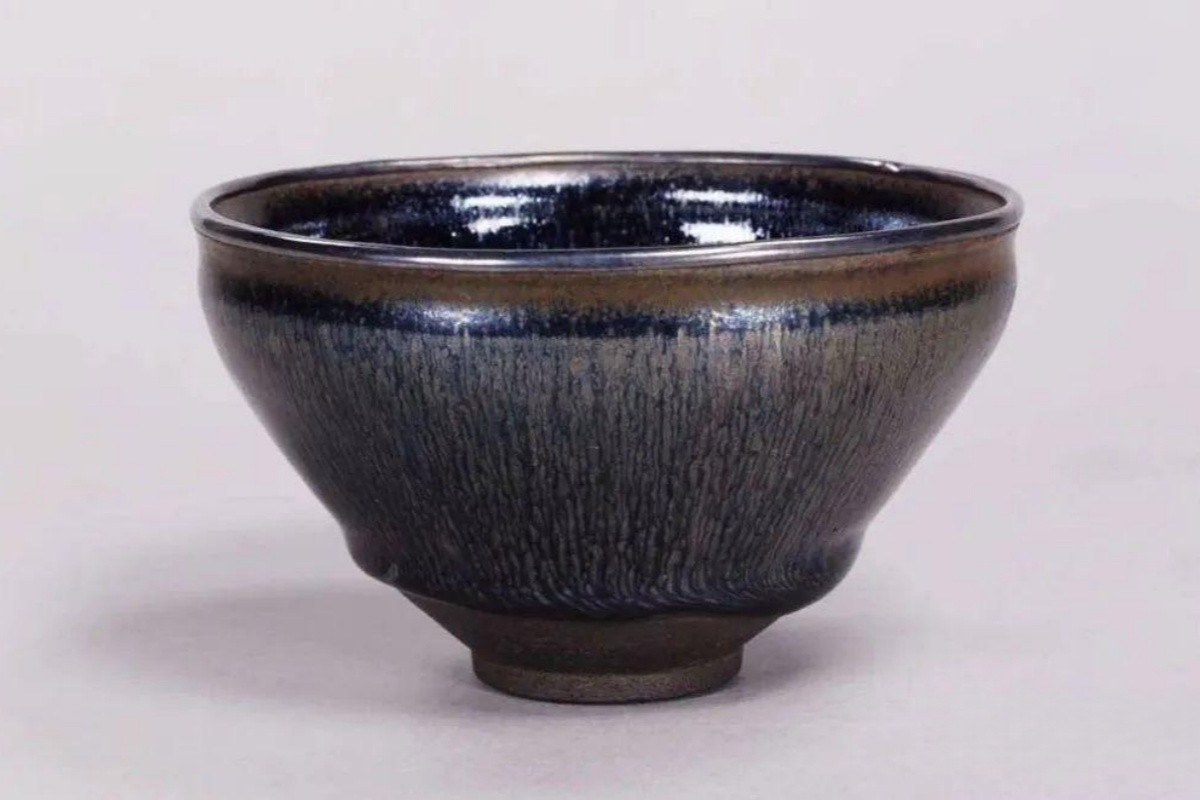
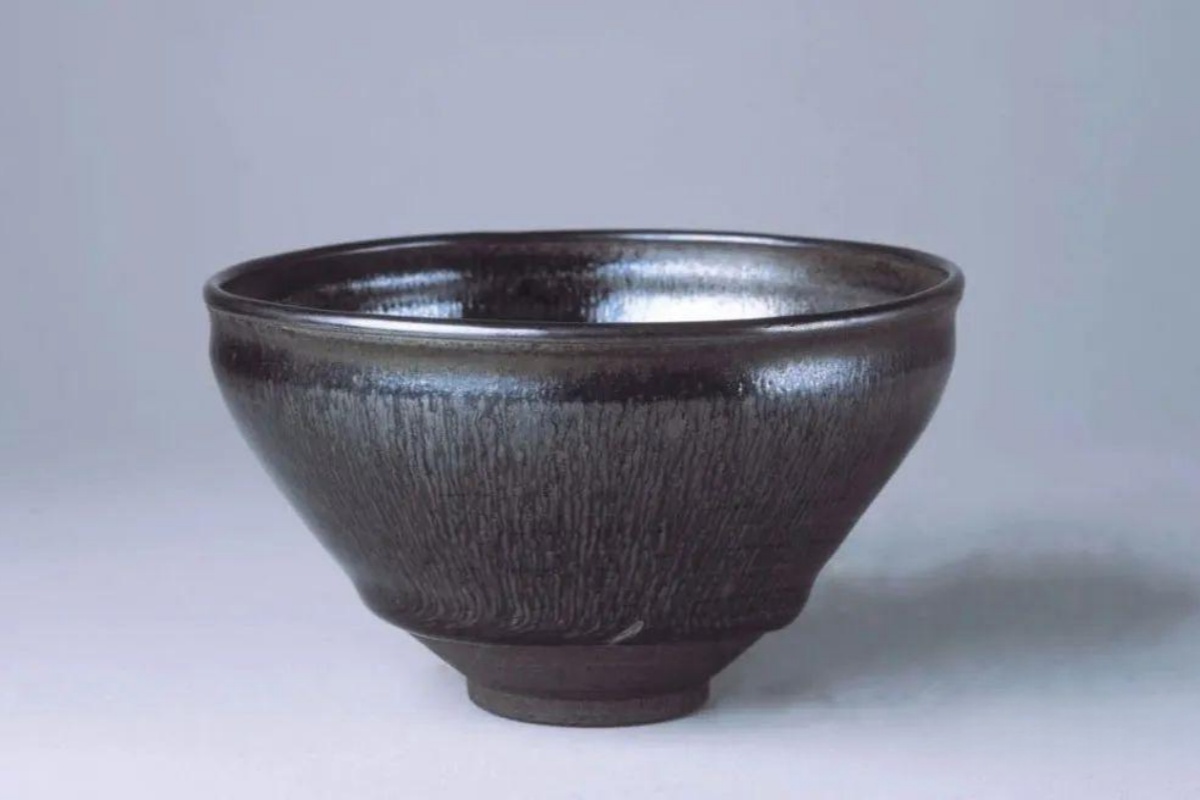
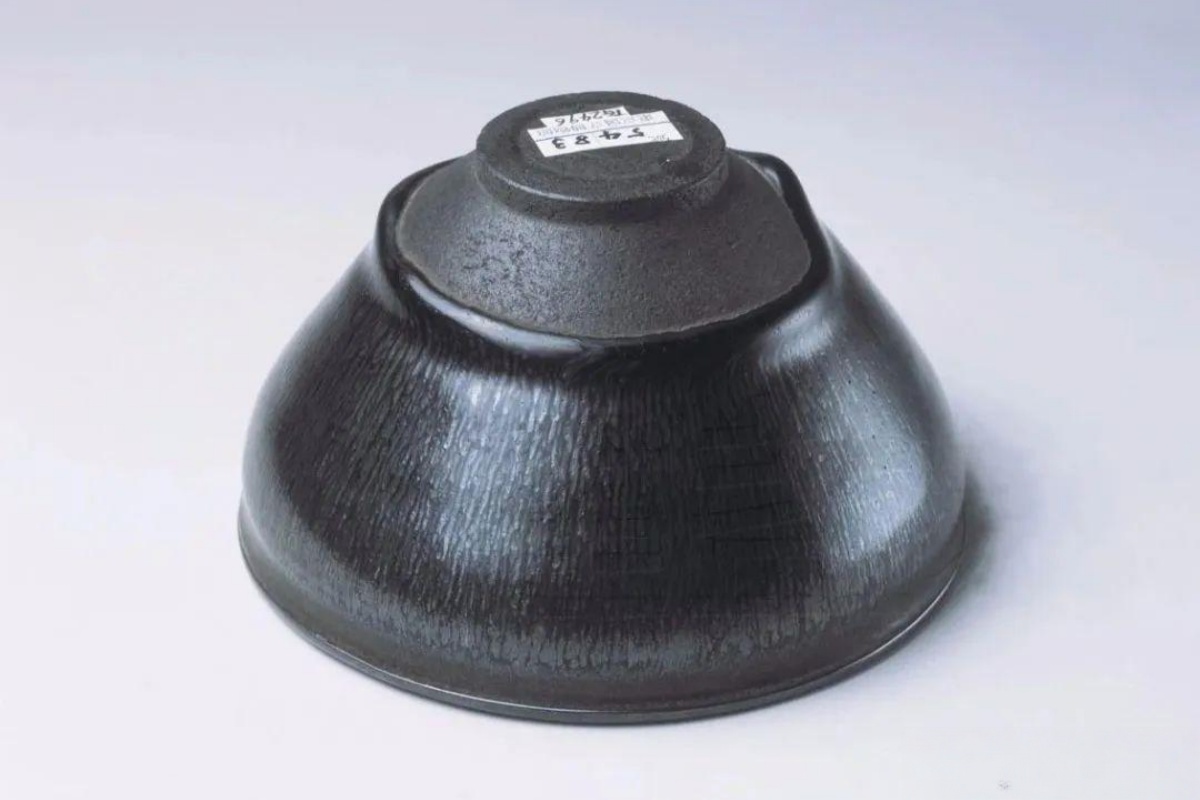 Song Dynasty Jian Kiln Hare's Fur Tea Bowl(Diameter: 12.2cm, Height: 7.0cm, Base: 3.9cm, Weight: 287.1g),Collection of Tokyo National Museum, Japan
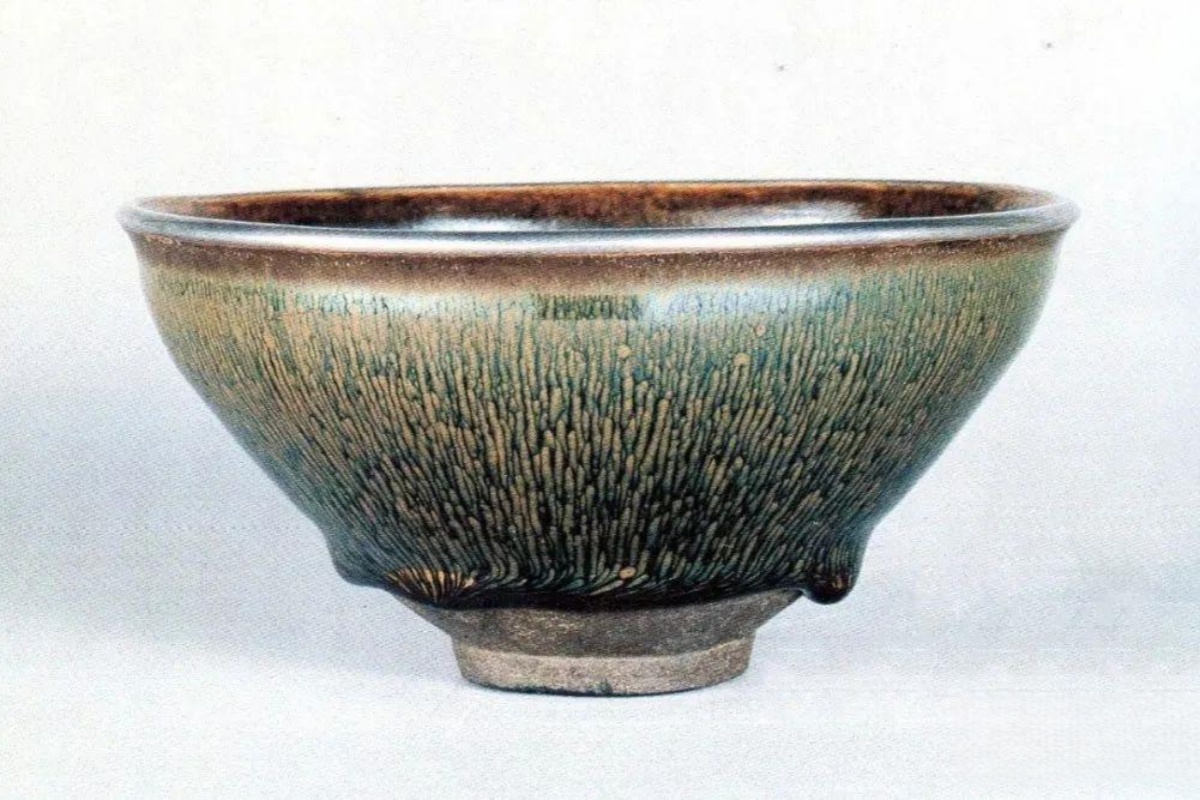 Song Dynasty, Jian Kiln Hare's Fur Tea Bowl (12.8cm Dia., 6.7cm H.), Kyoto National Museum.
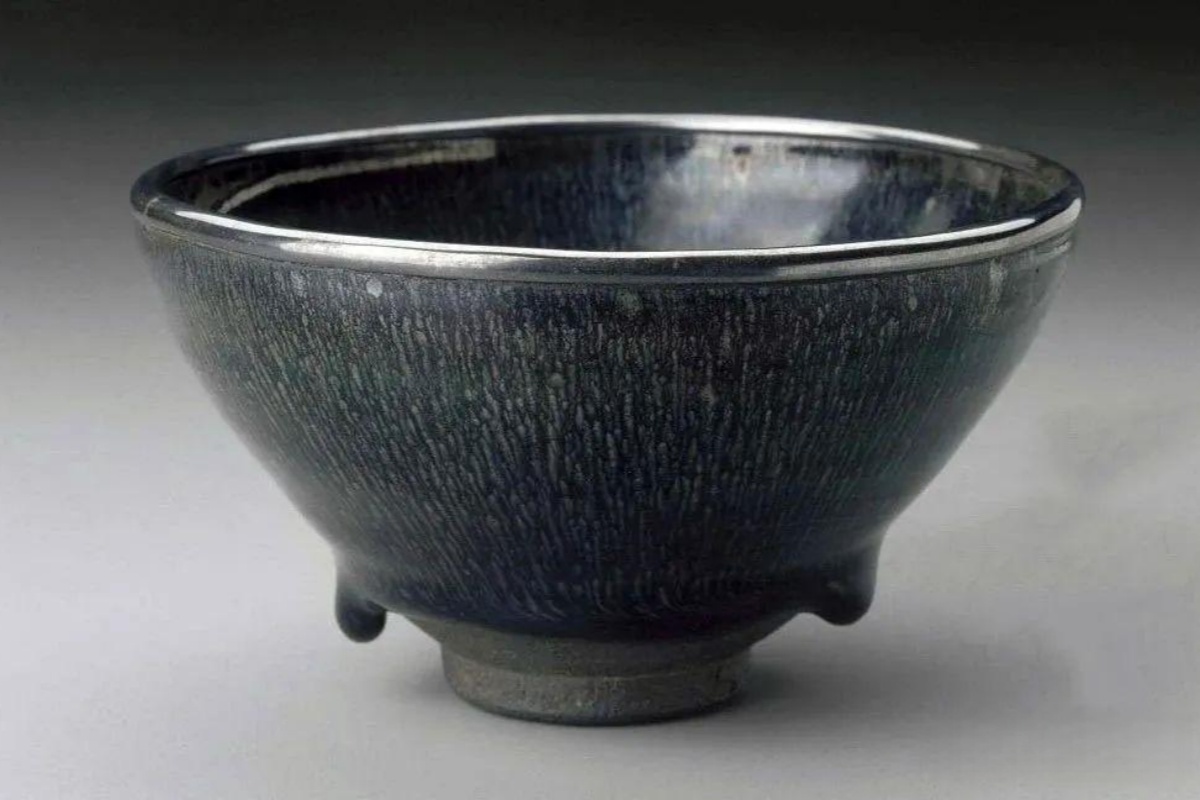
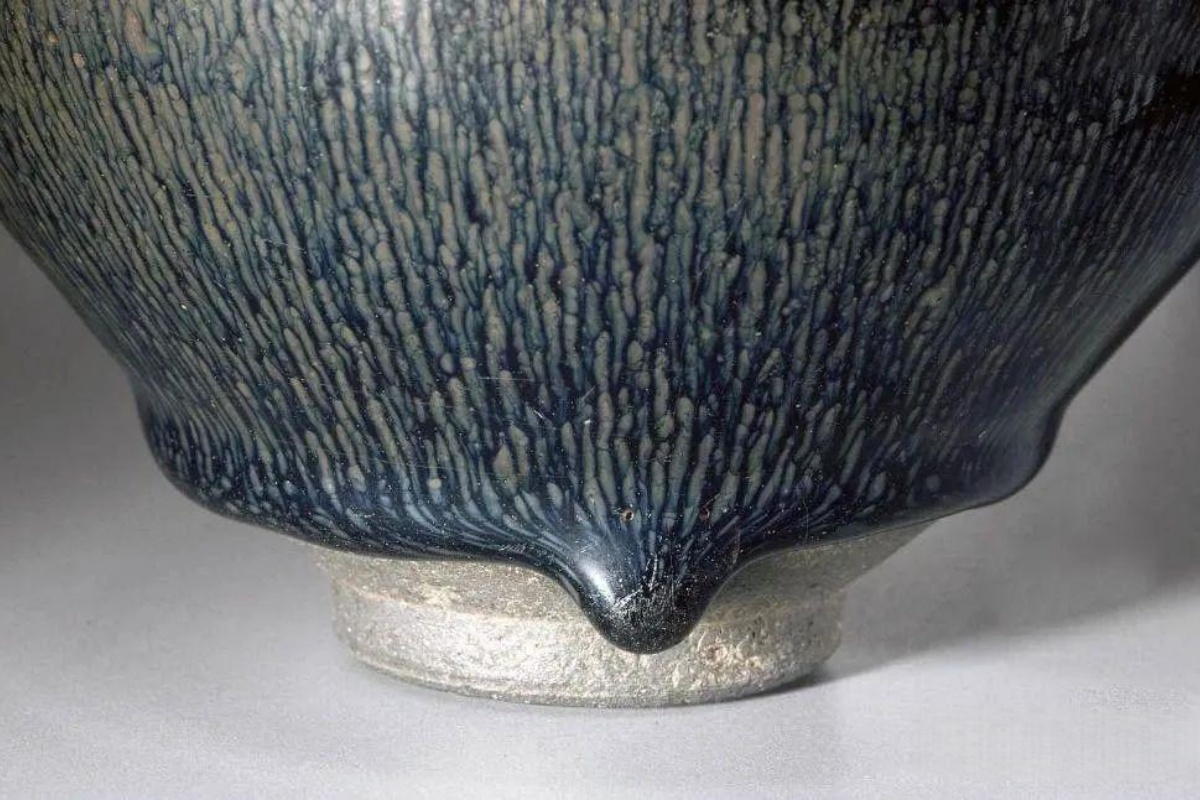
Southern Song Dynasty, Jian Kiln Hare's Fur Cup (D:8cm, H:7cm, BD:4cm, Wt:344g). Collection of the Museum of Fine Arts, Boston.
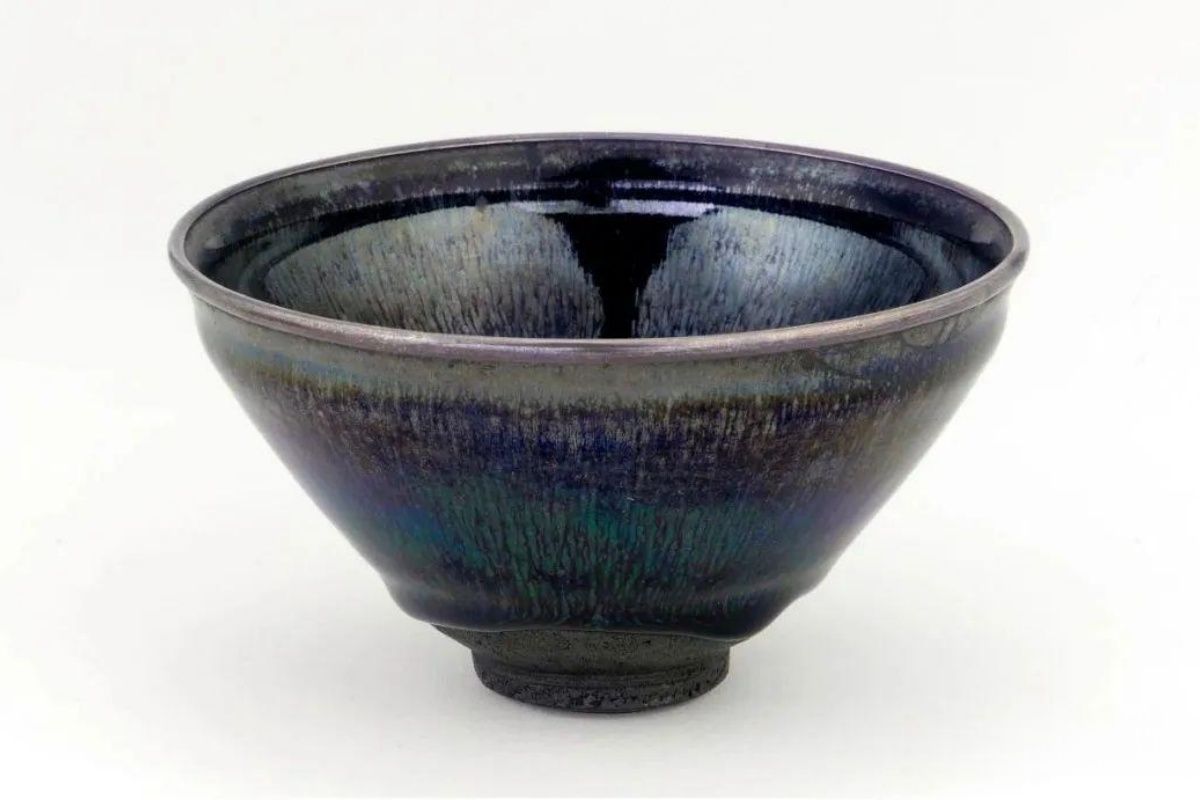 Song Dynasty Jian Yao Hare's Fur Cup (12.7cm×7.3cm), Freer Gallery of Art, USA.
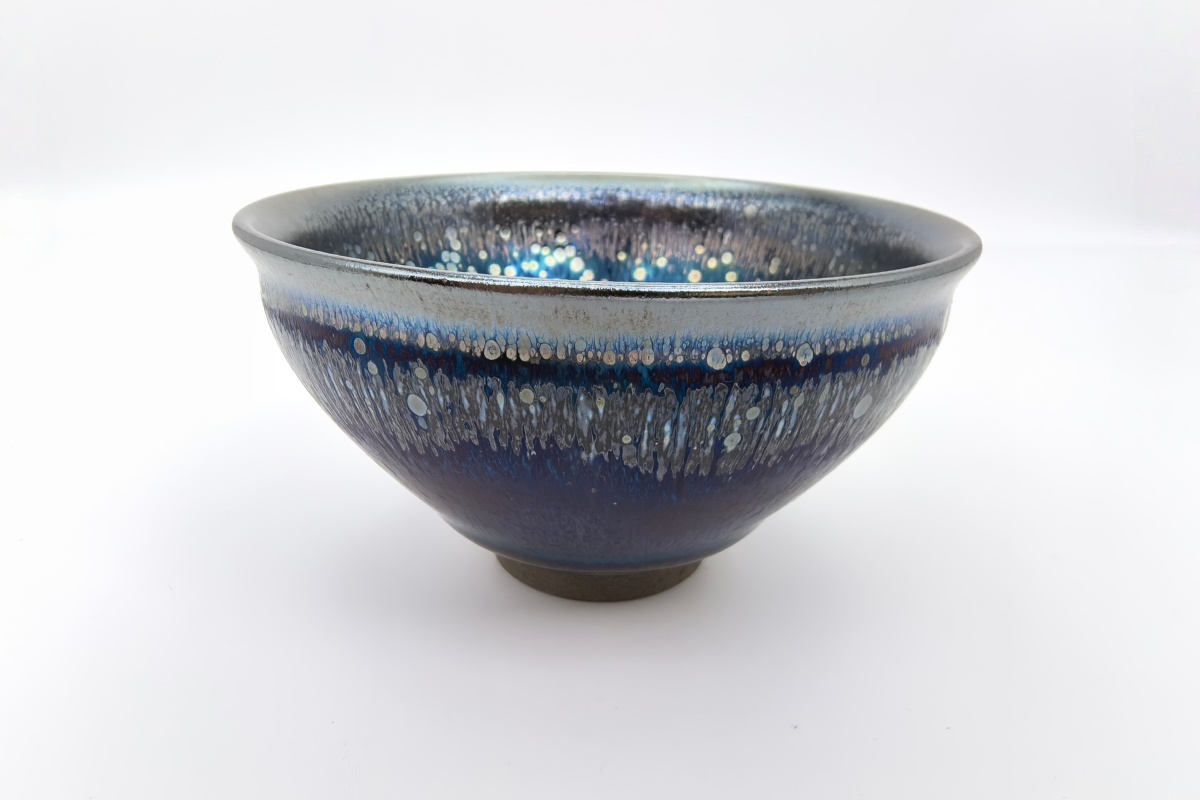 Master Ye Yiyun's Handcrafted Wood-Fired Crater Iridescent Tea Bowl
2. Flared Rim (Pie Kou,撇口) – Open and Balanced
The Pie Kou bowl has a long, curved belly and a rim that flares outward, suggesting a blooming flower. In the Song Dynasty, it was often used for serving tea.
A classic example is the Song Dynasty Hare’s Fur Pie Kou bowl housed in the Metropolitan Museum of Art, with smooth belly curves, a diameter of 16.5 cm, height of 7.9 cm, and a harmonious height-to-diameter ratio close to 1:2.
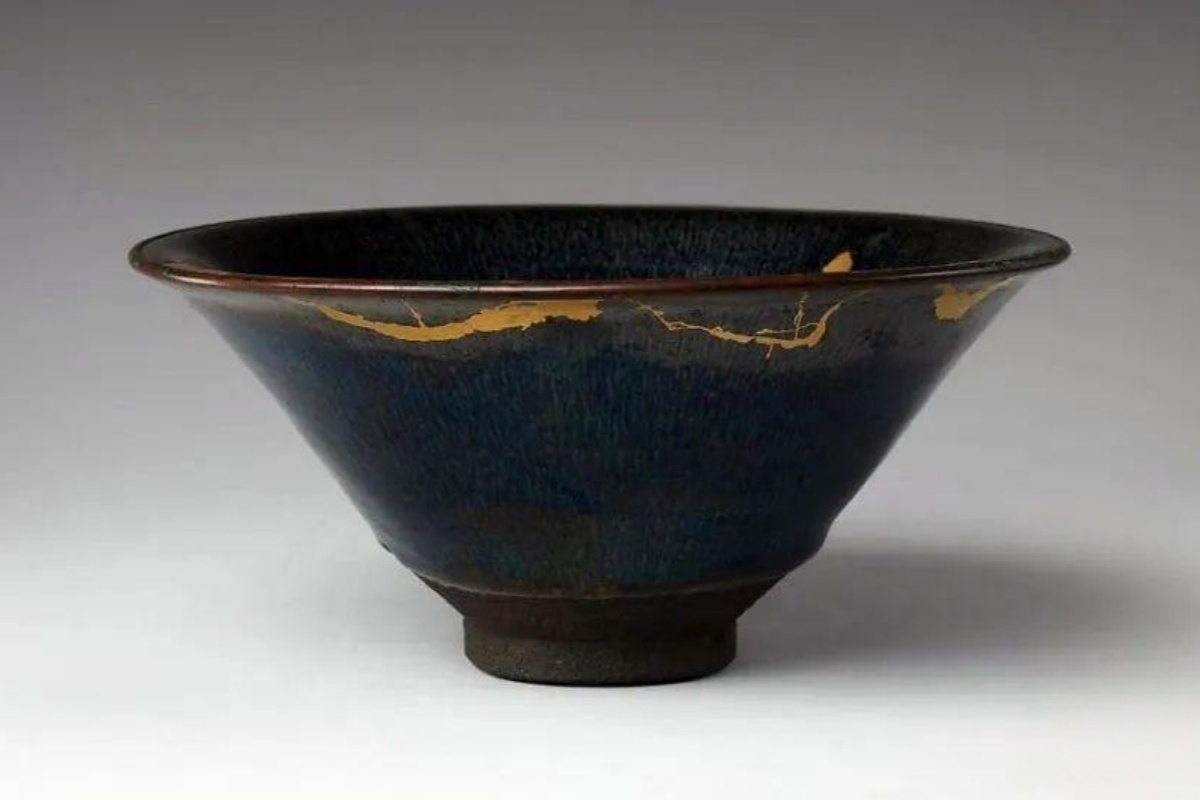 Song Dynasty Hare’s Fur Pie Kou bowl housed in the Metropolitan Museum of Art
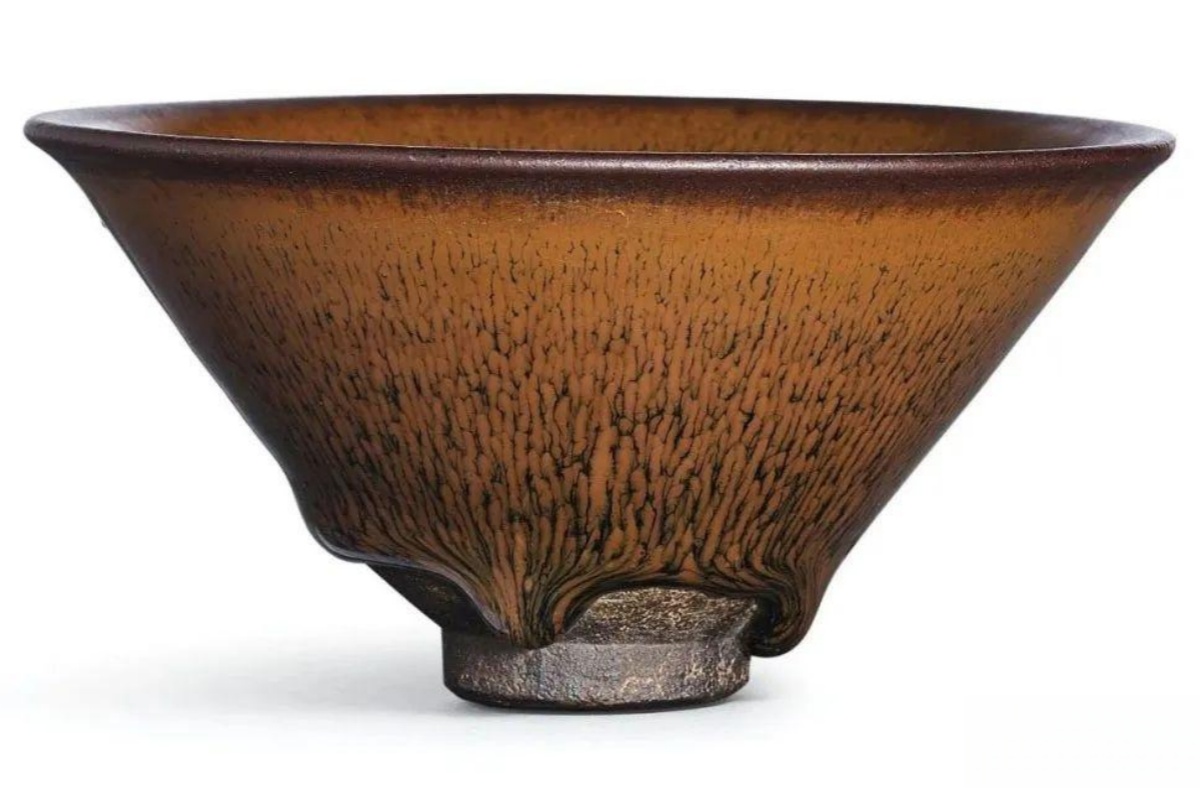
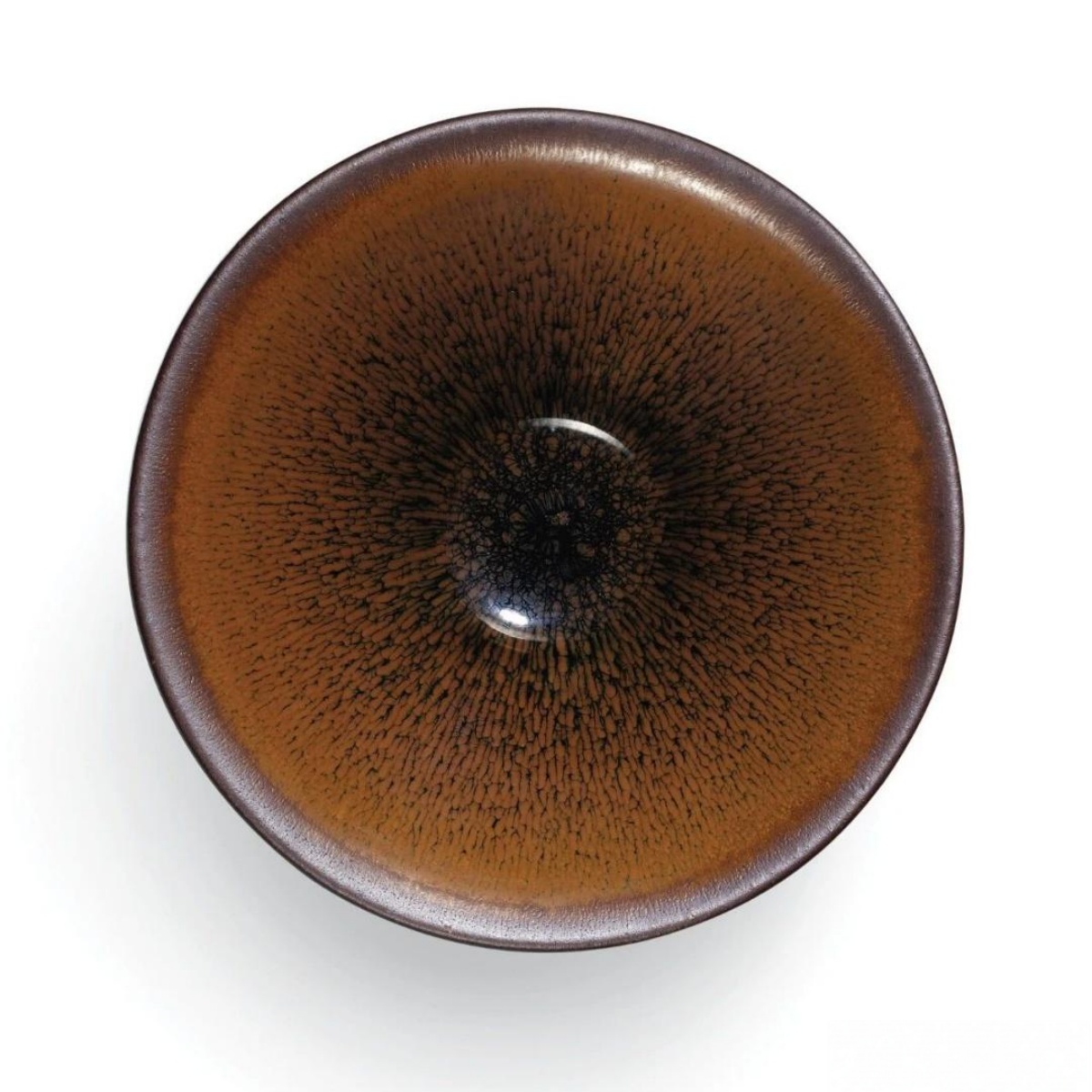 Song Dynasty Jian Kiln 'Hare's Fur' Tea Bowl (Sold for HK$3,460,000 at Sotheby's Hong Kong, Oct 3, 2017)
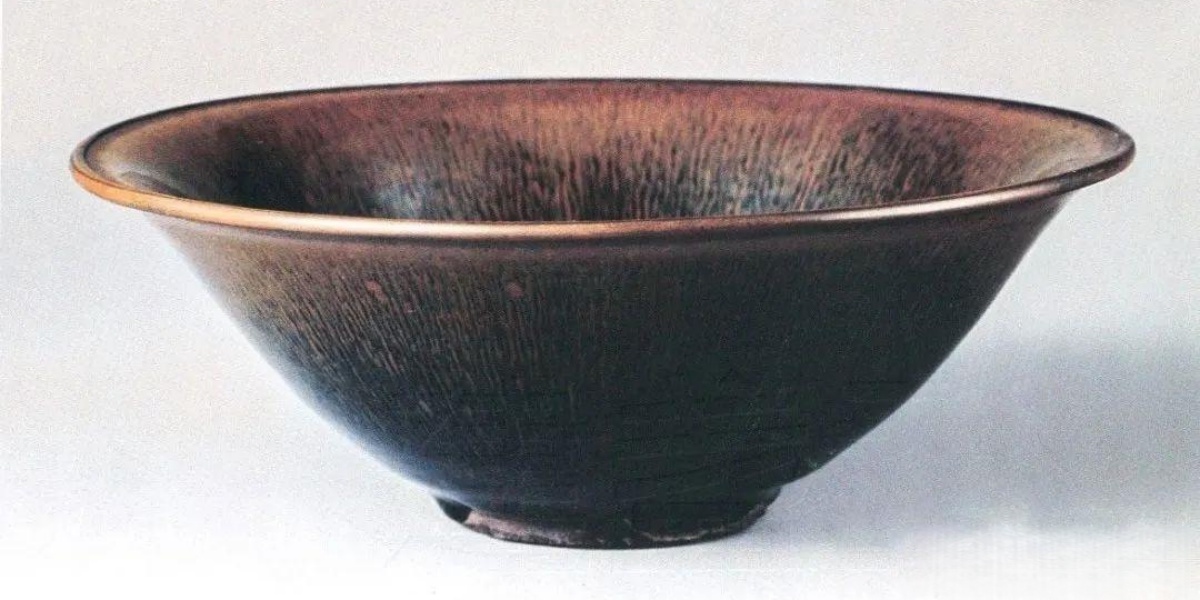
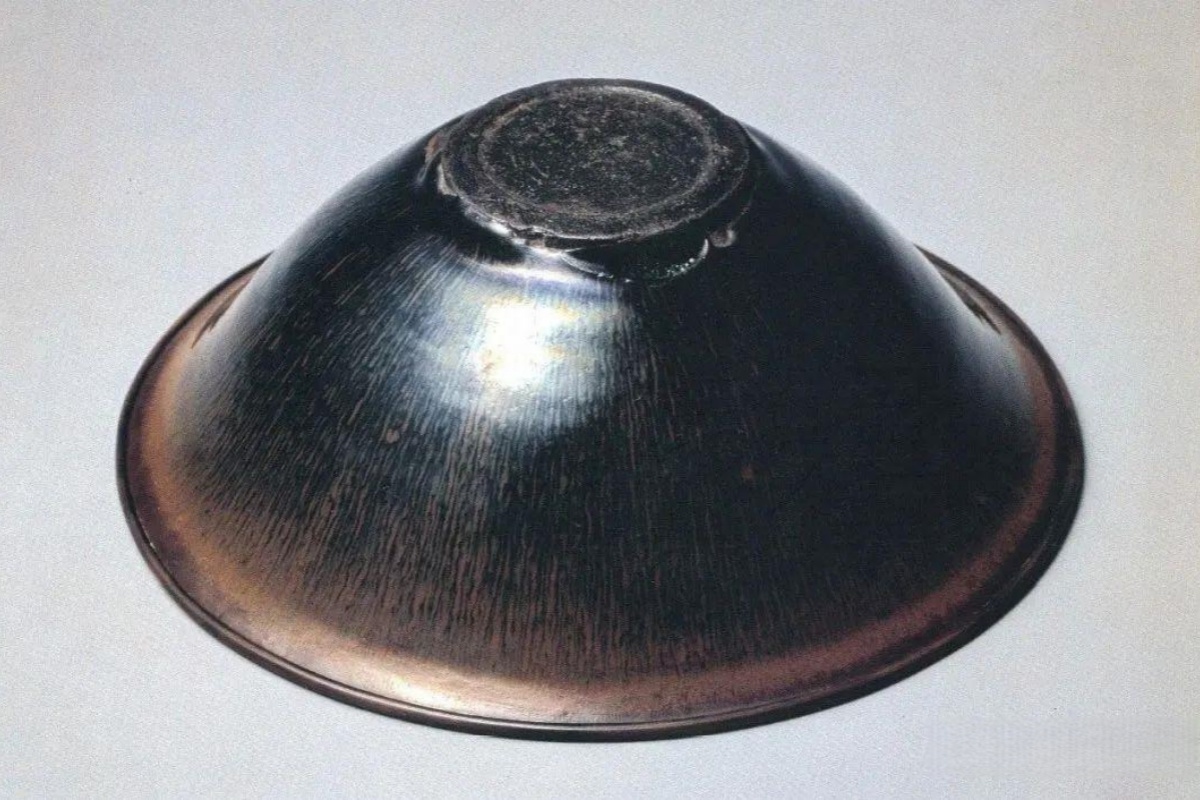 Song Dynasty, Jian Kiln Flared Tea Bowl (20.5cm×7.7cm×5.4cm), Gotoh Museum, Japan.
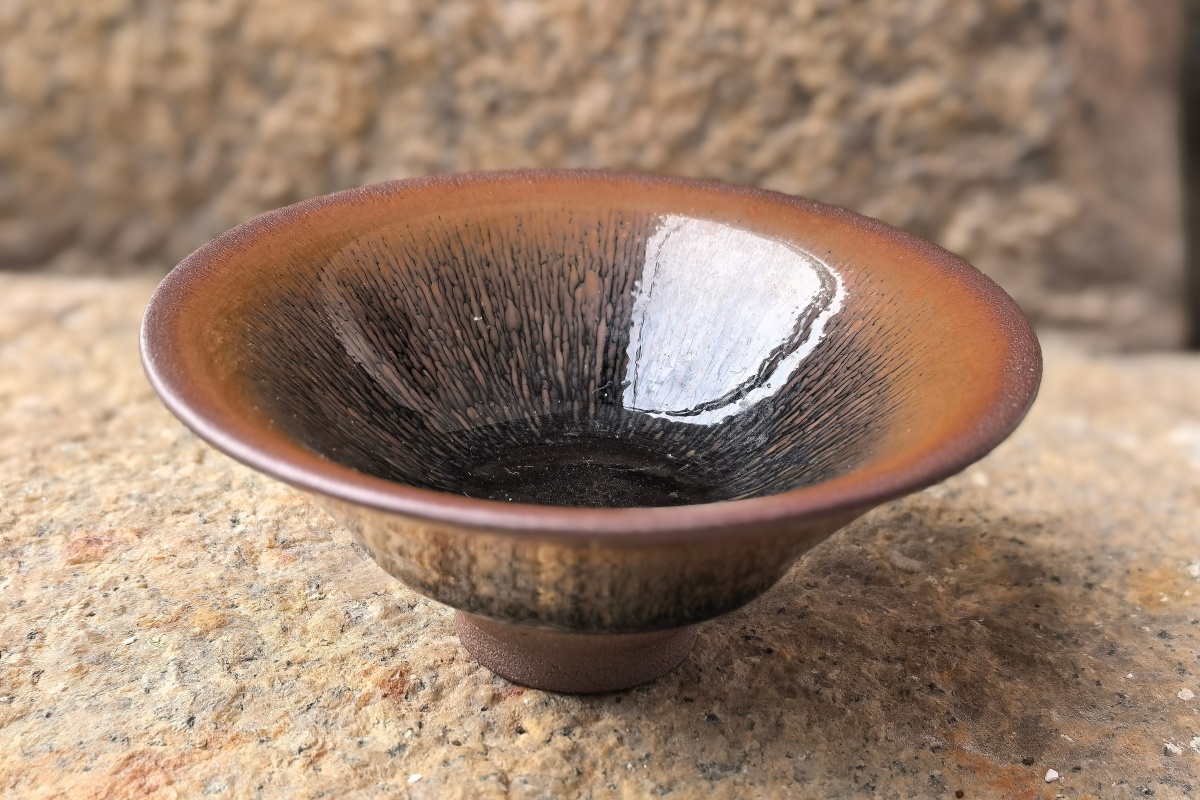 Master Ye Yiyun's Handmade Wood-Fired Hare's Fur Pie Kou Cup
3. Inward Rim (Lian Kou,敛口) – Round and Compact
The Lian Kou type has a gently incurving rim, making the bowl easier to handle and reducing spills. The outer wall is full and rounded, resembling a monk’s alms bowl, but with a foot.
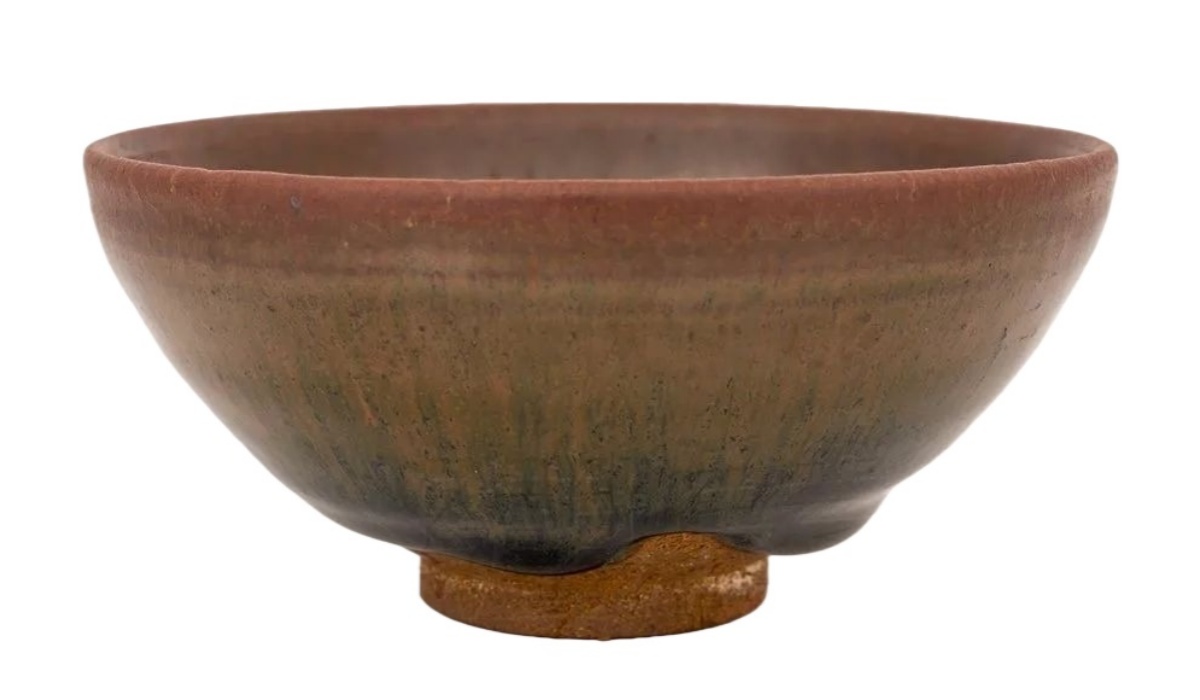 Song Jianyao Conical Bowl, Arthur M. Sackler Museum, Harvard University
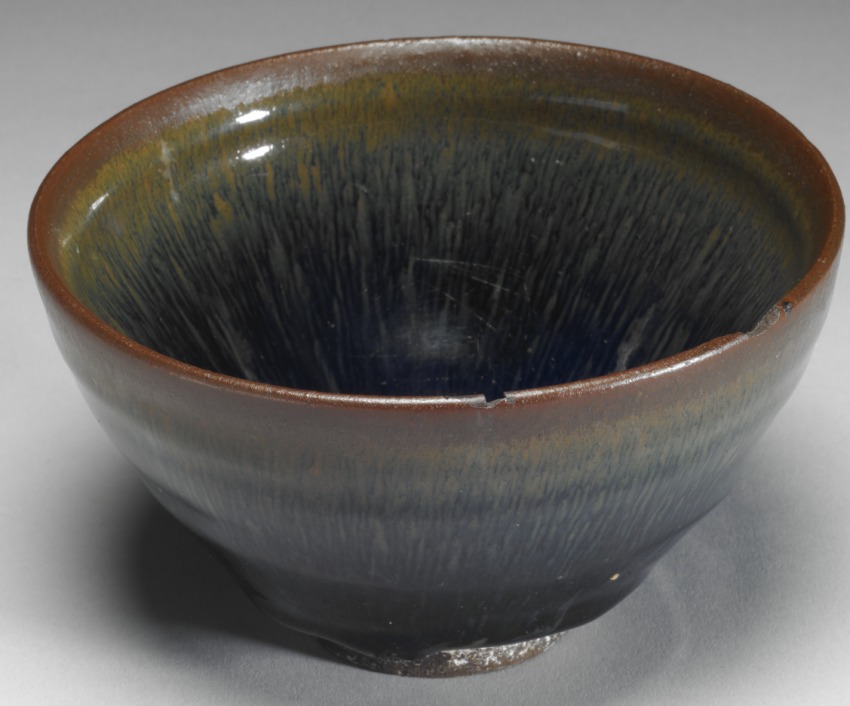 Song Dynasty Jian Kiln Black-Glazed 'Hare's Fur' Tea Bowl (Taipei Palace Museum Collection)
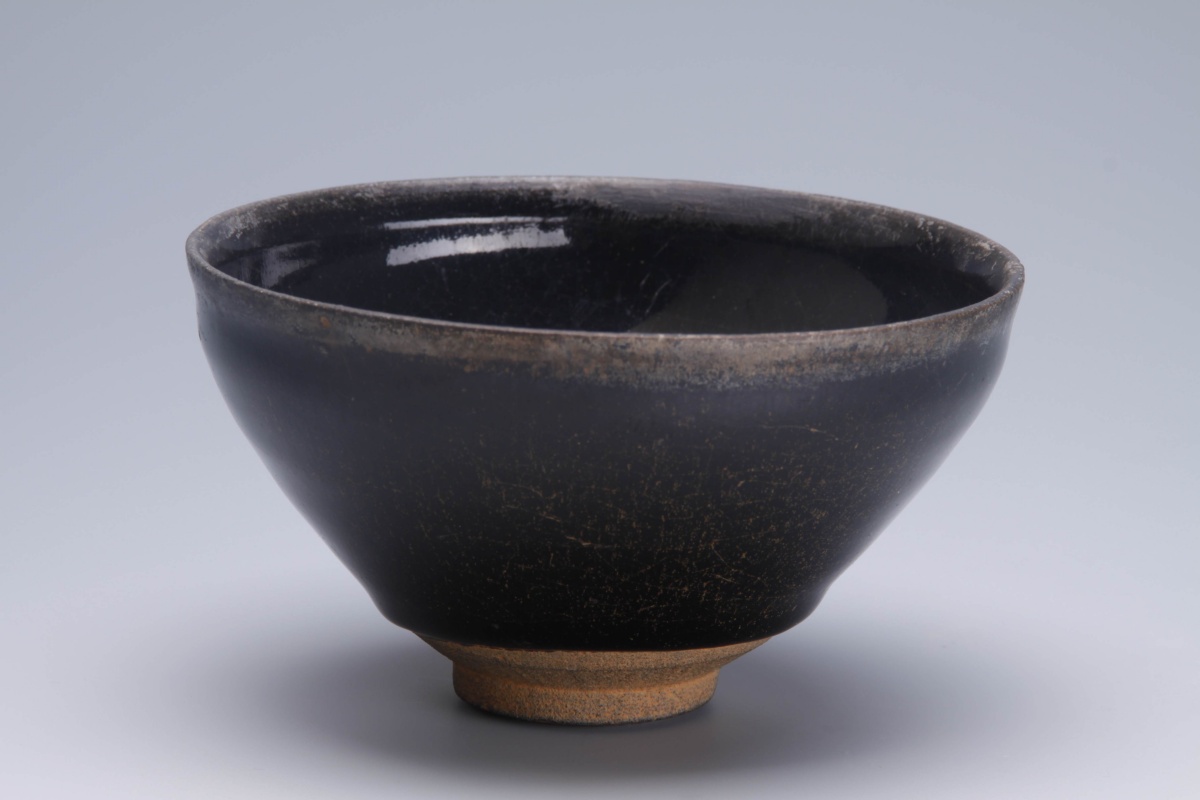 Song Dynasty Jianyang Black-Glazed Tea Bowl (Collection of Nanping Jianyang Museum)
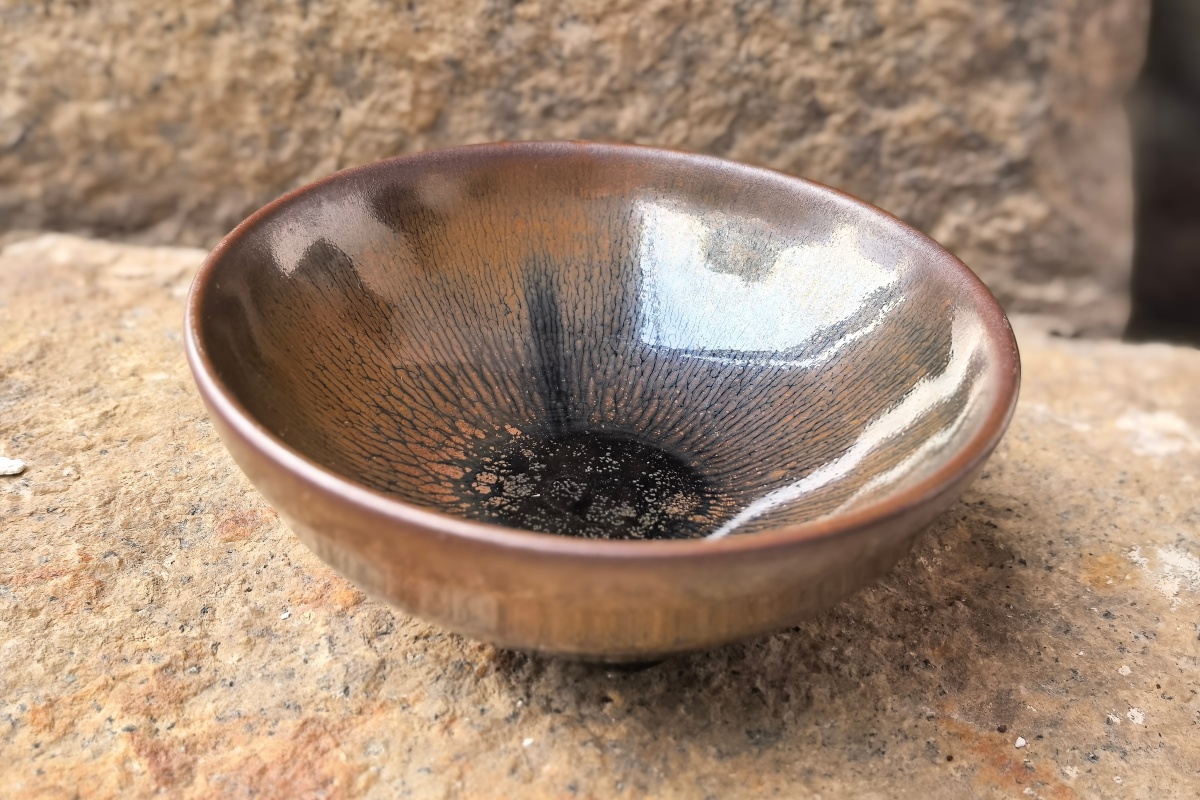
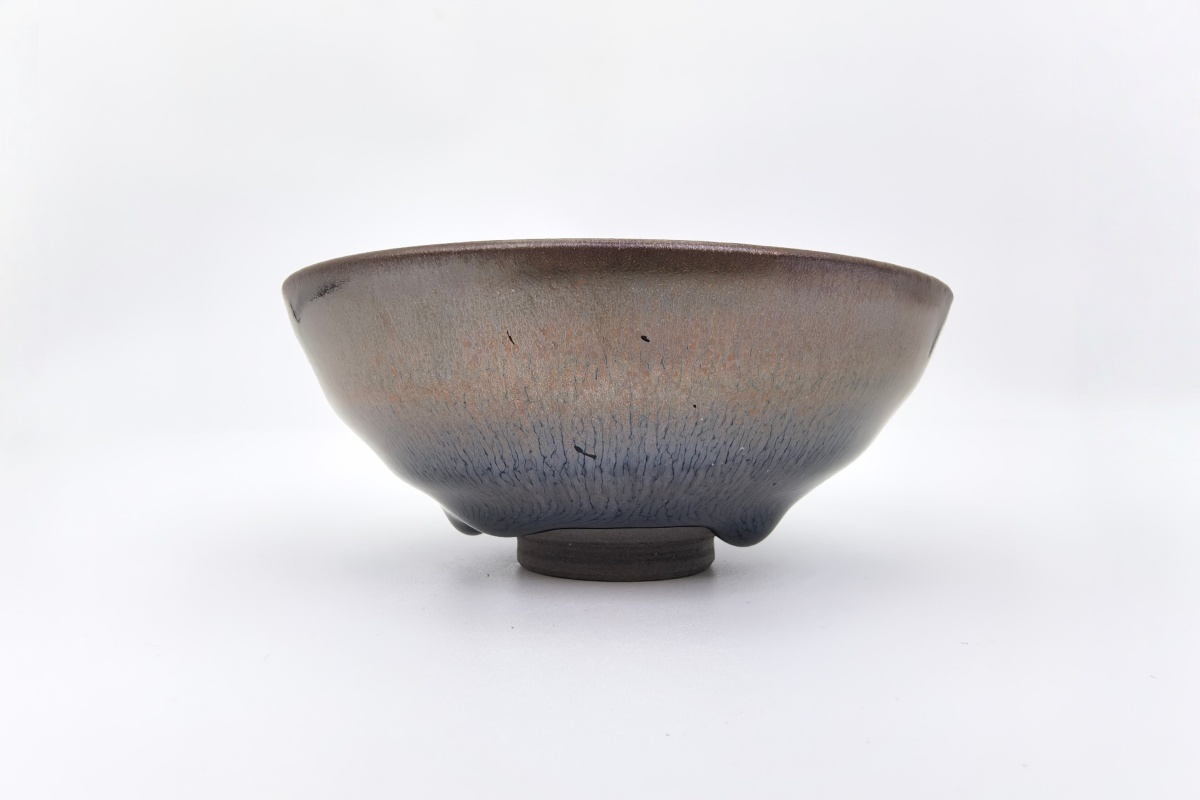 Master Ye Yiyun's Handmade Wood-Fired Golden Hare's Fur Lian Kou Cup
4. Wide Rim (Chang Kou,敞口) – Straightforward and Spacious
Also called “Dou Li” (Bamboo Hat) style, this shape has a shallow, sloping wall with little to no curvature—a typical V-shaped profile. The open mouth and narrow base give it a tall, slender silhouette, making it one of the iconic forms of Song ceramics.
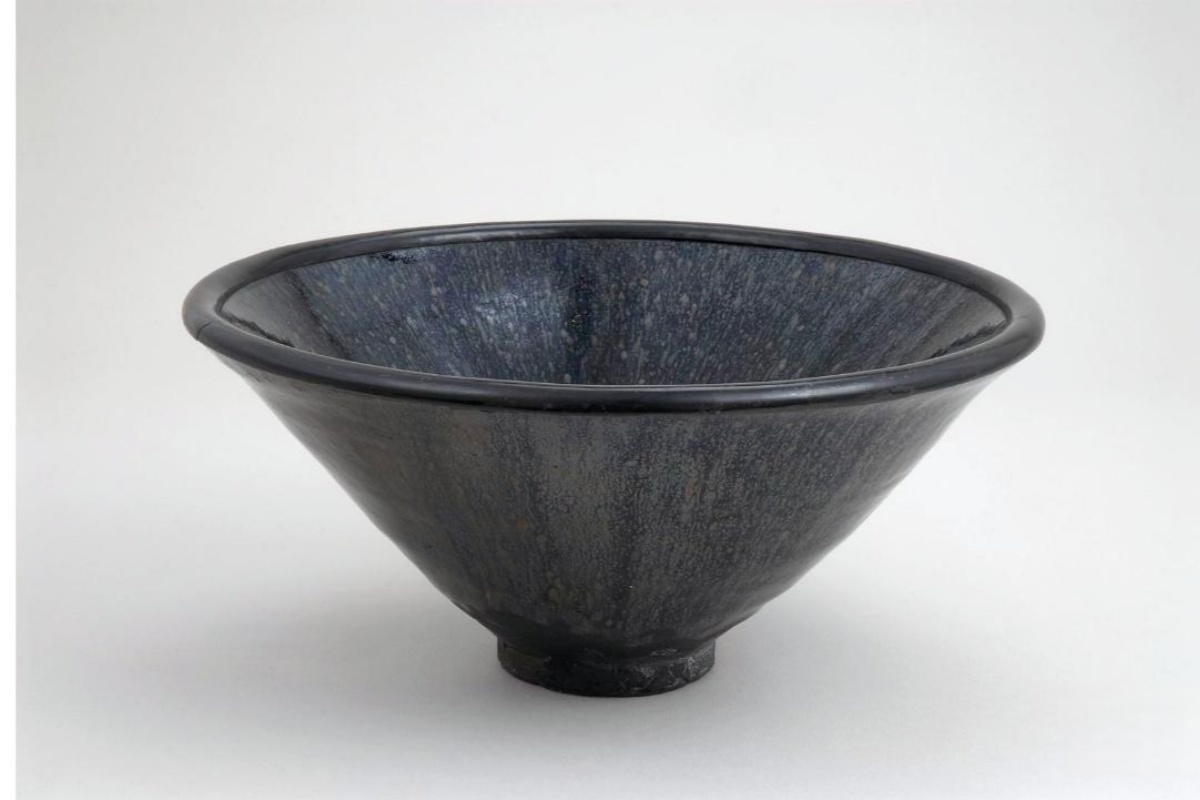 British Museum's Southern Song Jian Kiln Hare's Fur Cup
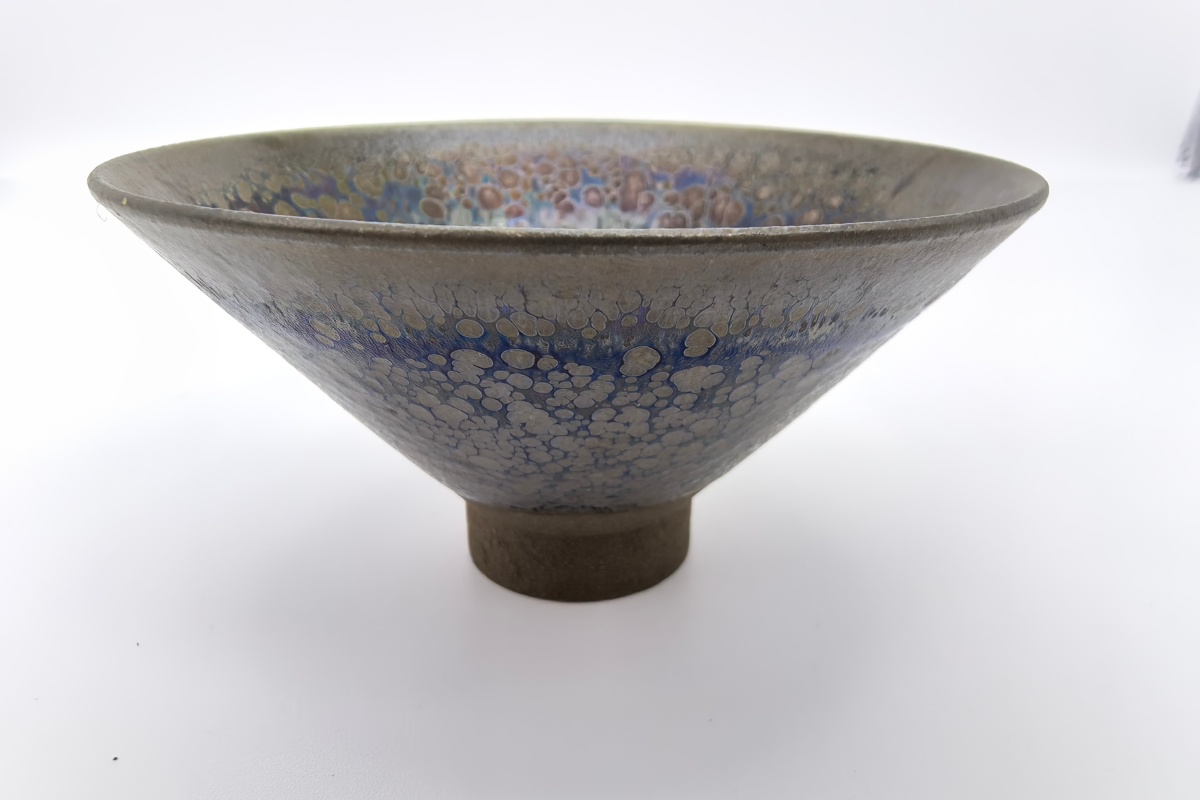 Master Ye Yiyun's Handmade Wood-Fired Chang Kou Cup
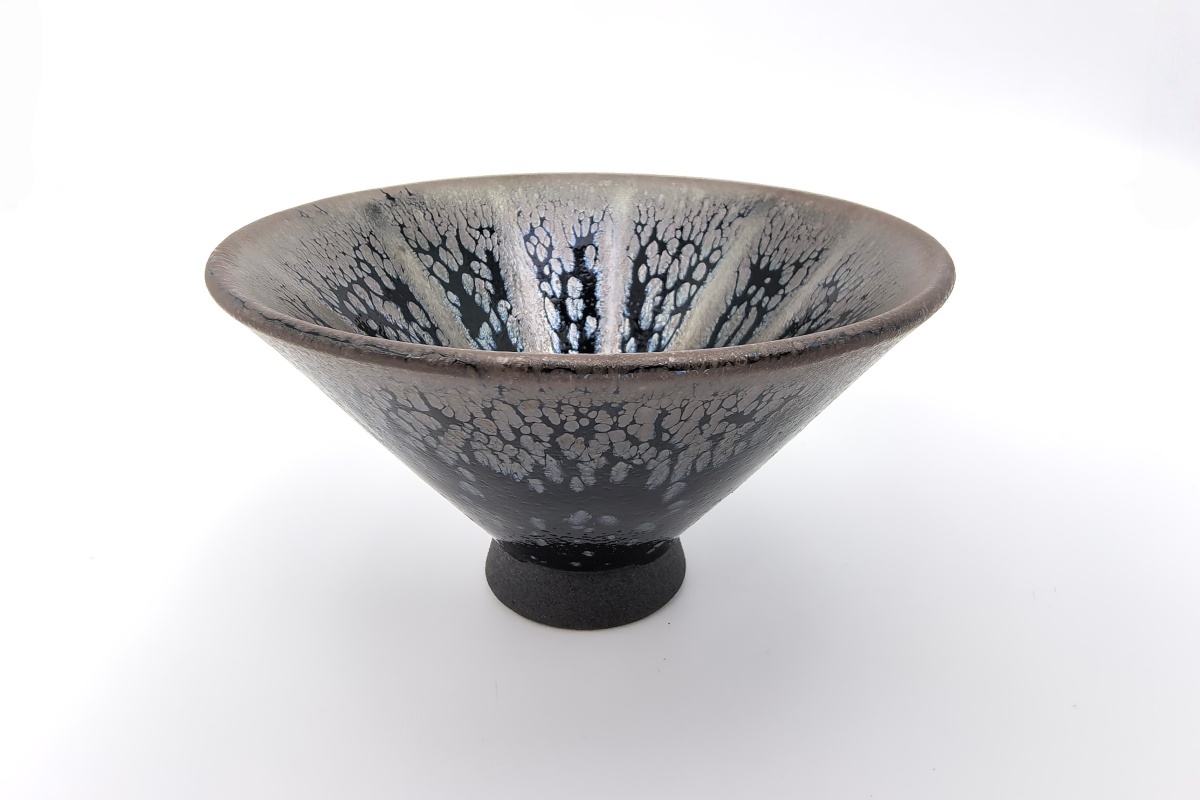 Master Ye Yiyun's Handmade Wood-Fired Chang Kou Cup
II. Traditional Sizes
Studies of excavated and preserved Jian Zhan show that Song Dynasty artisans generally produced three standard sizes:
Large: diameter over 15 cm
Medium: diameter between 11–15 cm
Small: diameter under 11 cm
In most cases, the ratio of diameter to height is equal to or slightly greater than 2:1.
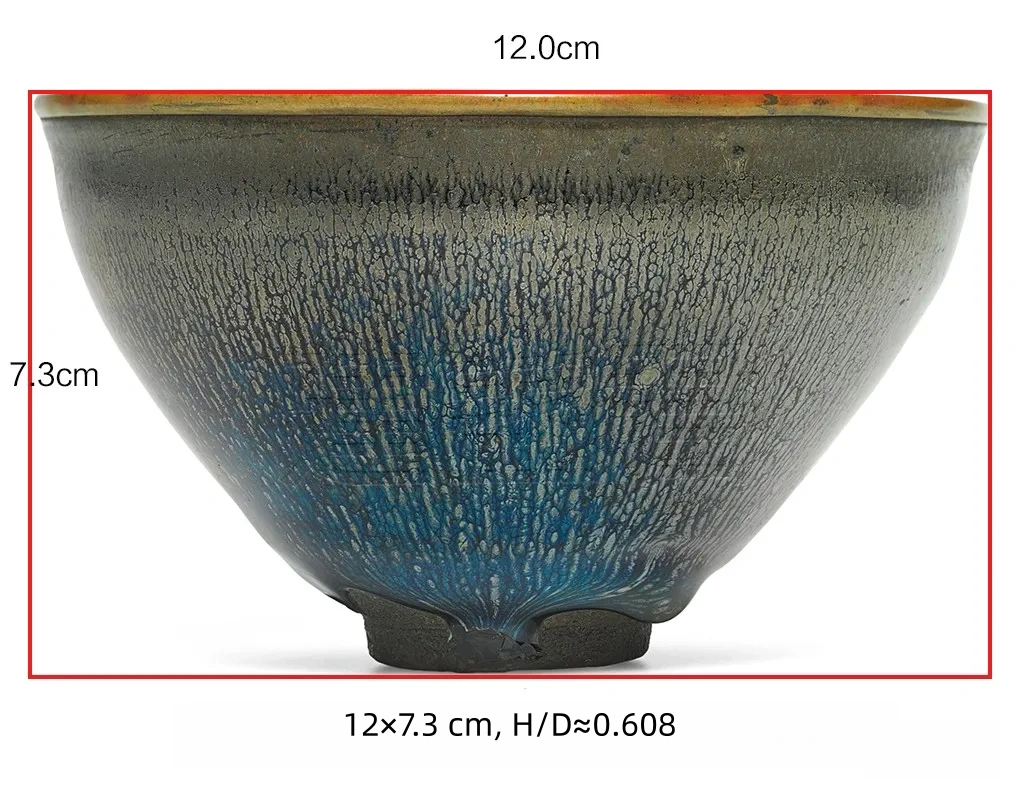
Some classic pieces even reflect the golden ratio (≈0.618), as seen in the Southern Song Oil Spot Shu Kou bowl from the Tokugawa Art Museum, where height/diameter ≈ 0.6.
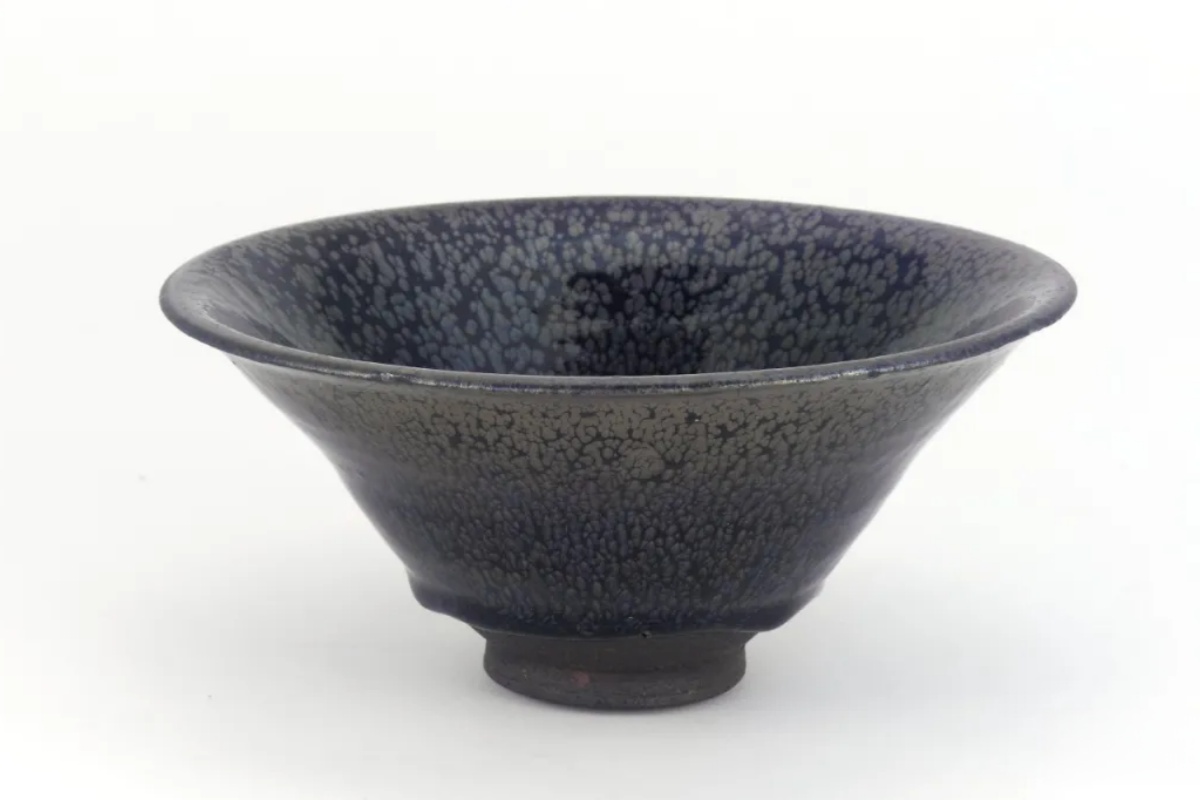 Southern Song Oil Spot Shu Kou bowl from the Tokugawa Art Museum
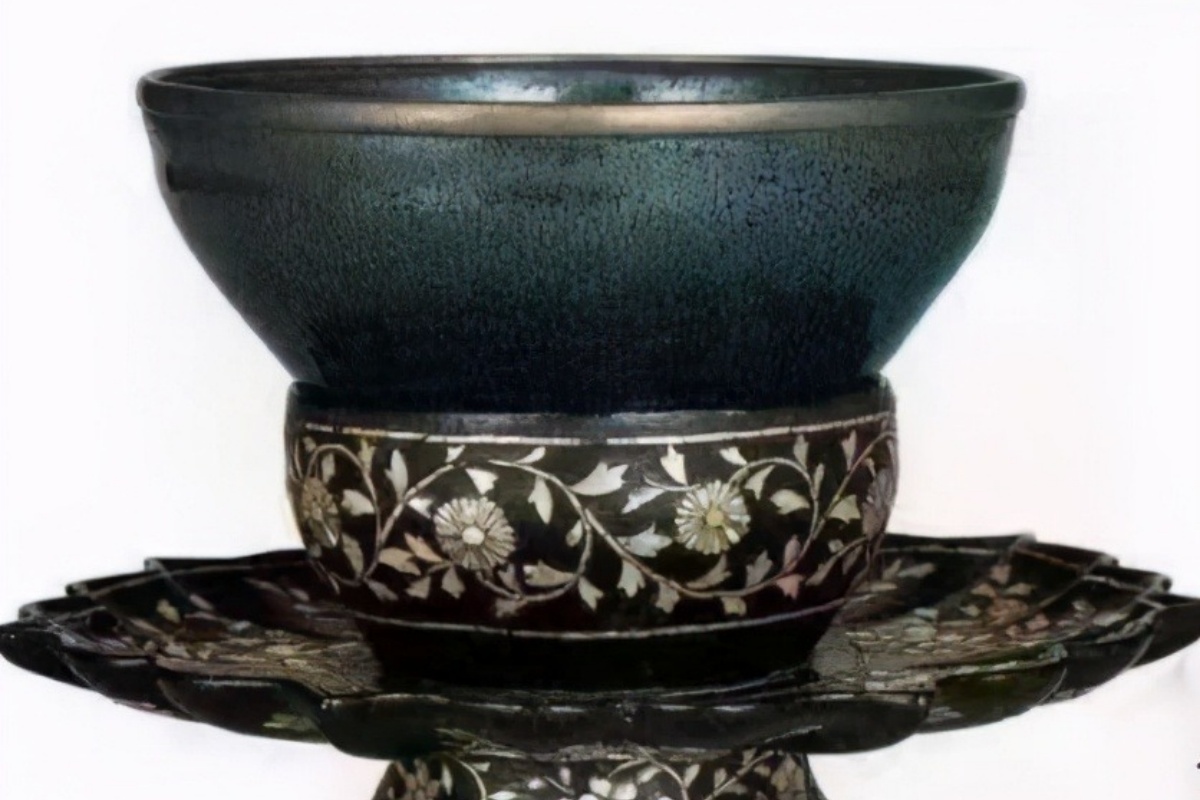 Southern Song Dynasty, Jian Kiln Oil-Spot Cylinder Cup, 12.1×7.1 cm, Tokugawa Art Museum. H/D≈0.6
III. Contemporary Shapes
Modern Jian Zhan artists have introduced new forms while respecting tradition:
1. Bamboo Segment Cup
Resembling a bamboo stem, this shape is ergonomic—easy to hold and heat-resistant.
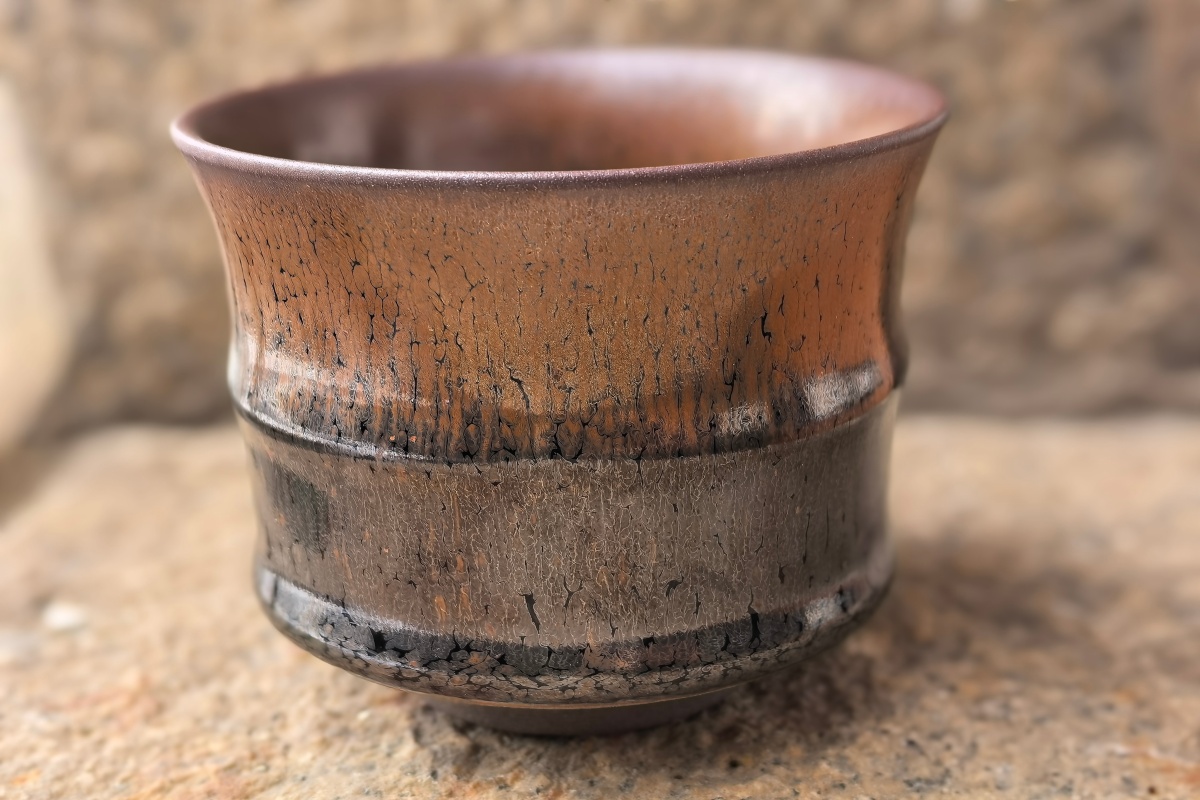 Master Ye Yiyun's Handcrafted Bamboo-Joint Cup, Wood-Fired
2. Floral Rim Cup
A modern innovation by Master Ye Yiyun, this form features a lotus-like rim. Entirely hand-thrown, it combines aesthetic delicacy with functional volume.
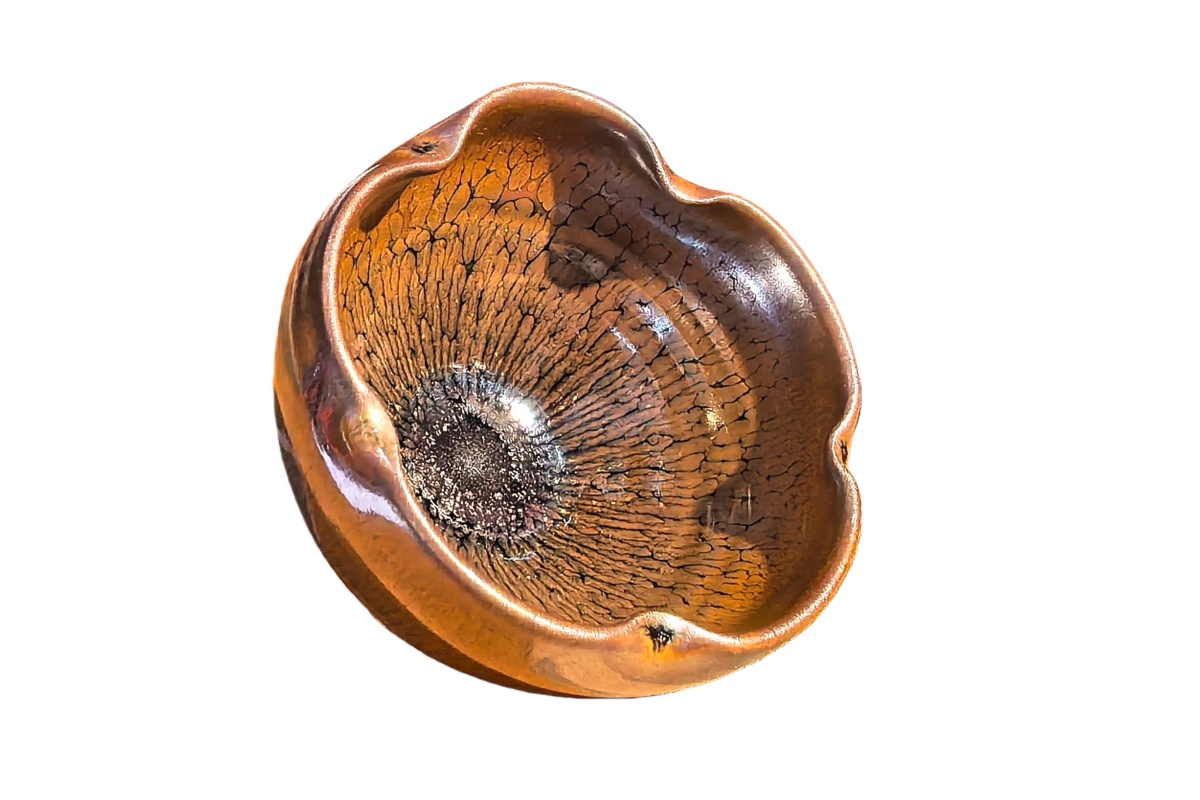
3. Zen Meditation Cup
With an inward-curving rim and a rounded, prominent belly, this cup is held at its fullest part. Inspired by Zen meditation, it encourages calm and focus.
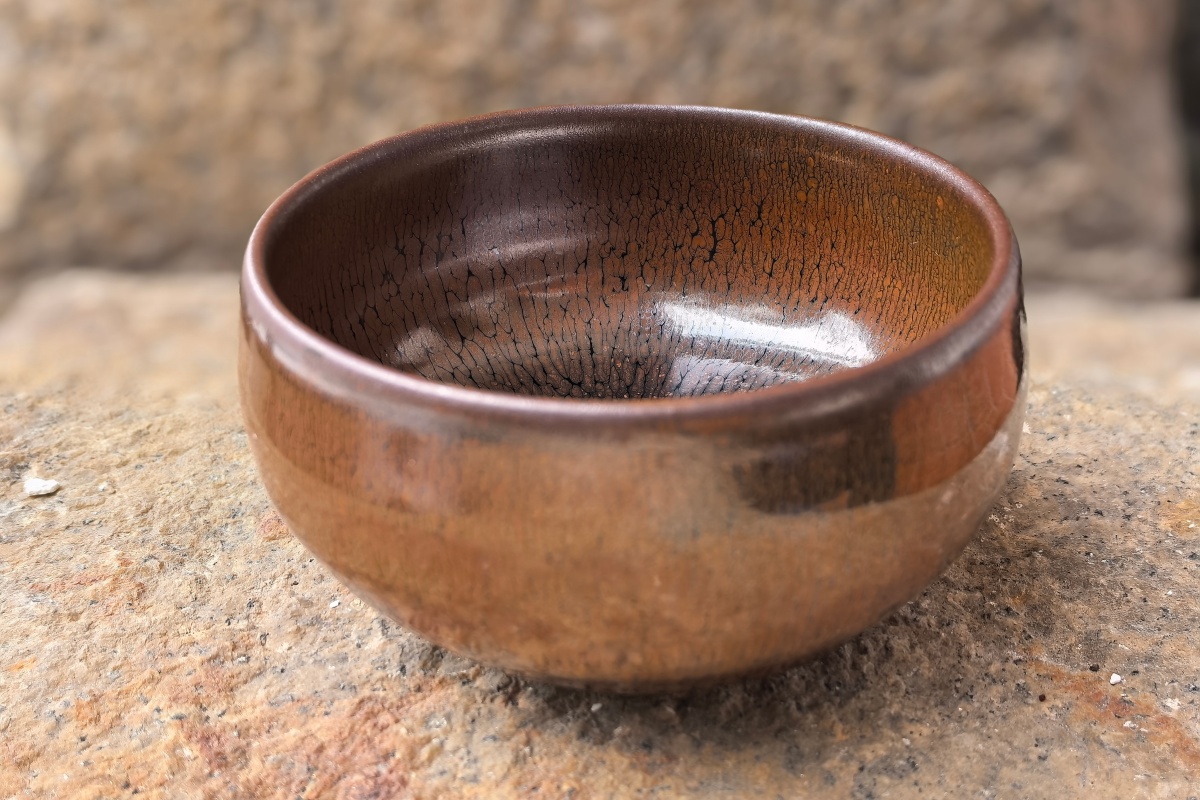 Master Ye Yiyun's Handcrafted Zen Meditation Cup, Wood-Fired
4. Alms Bowl Style
Modeled after a monk’s bowl, this shape emphasizes stability and a serene presence.
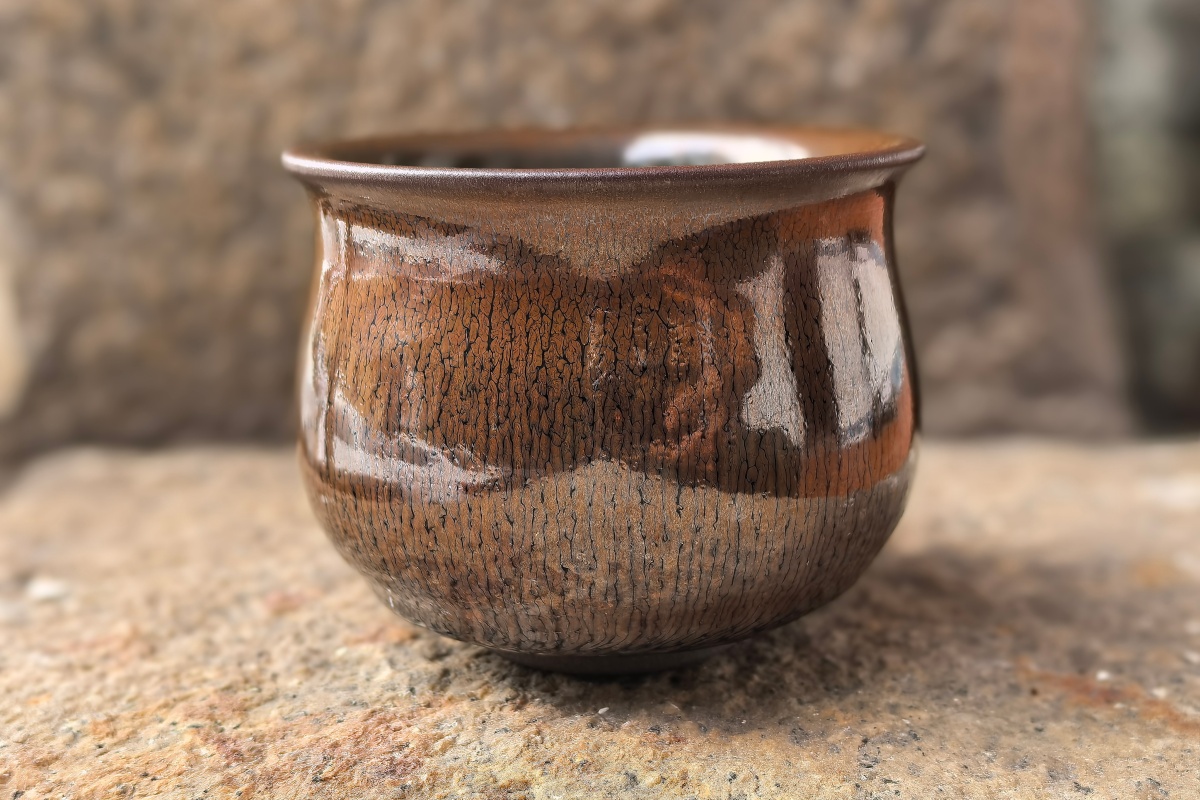 Master Ye Yiyun's Handcrafted Alms Bowl Style Cup, Wood-Fired
Many other contemporary shapes have also been developed, continuing the evolution of Jian Zann craftsmanship.