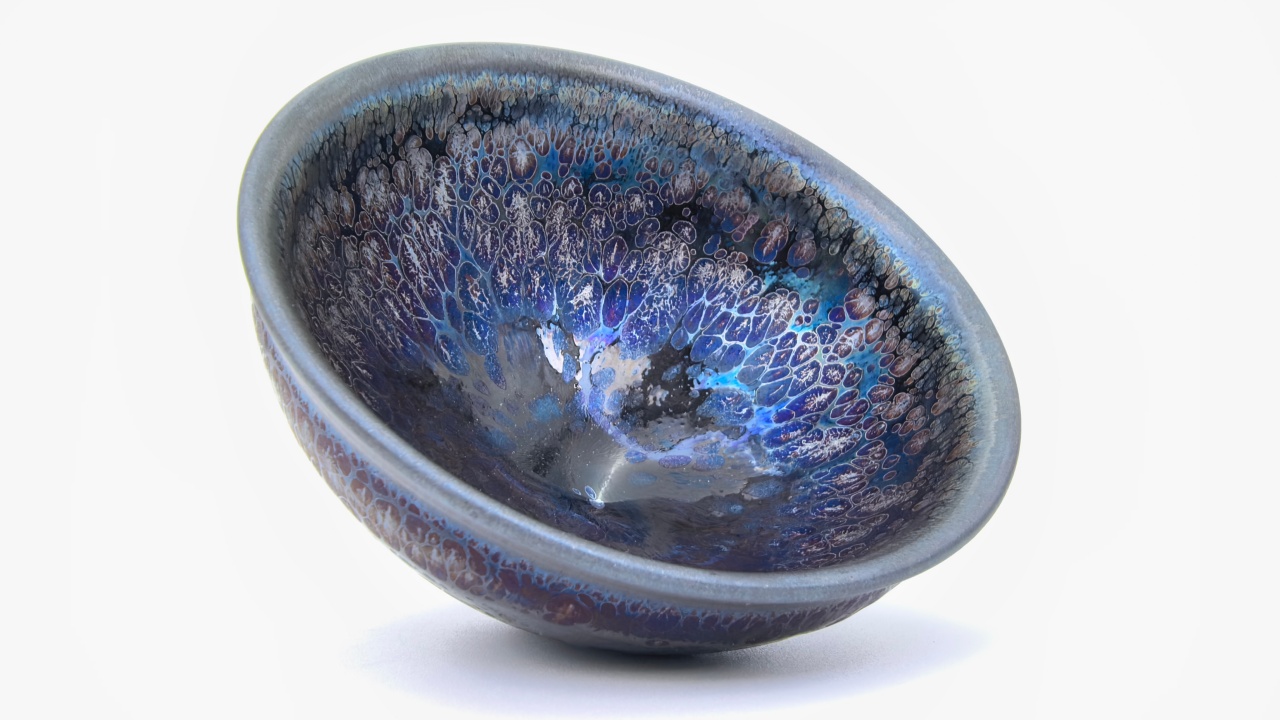
Understanding the natural imperfections in Jian Zhan is key to appreciating this ancient art. These characteristics often stem from the unique local clay and glaze used, combined with a high-firing process that has been passed down for over a millennium.
It's important to note that not all flaws are equal. Some are considered major defects, while minor ones that don't compromise aesthetics may be acceptable. Interestingly, some imperfections are even celebrated as a unique form of beauty.
I. Glaze Imperfections
Glaze variations occur due to uneven flow at high temperatures or gases released from the clay body.
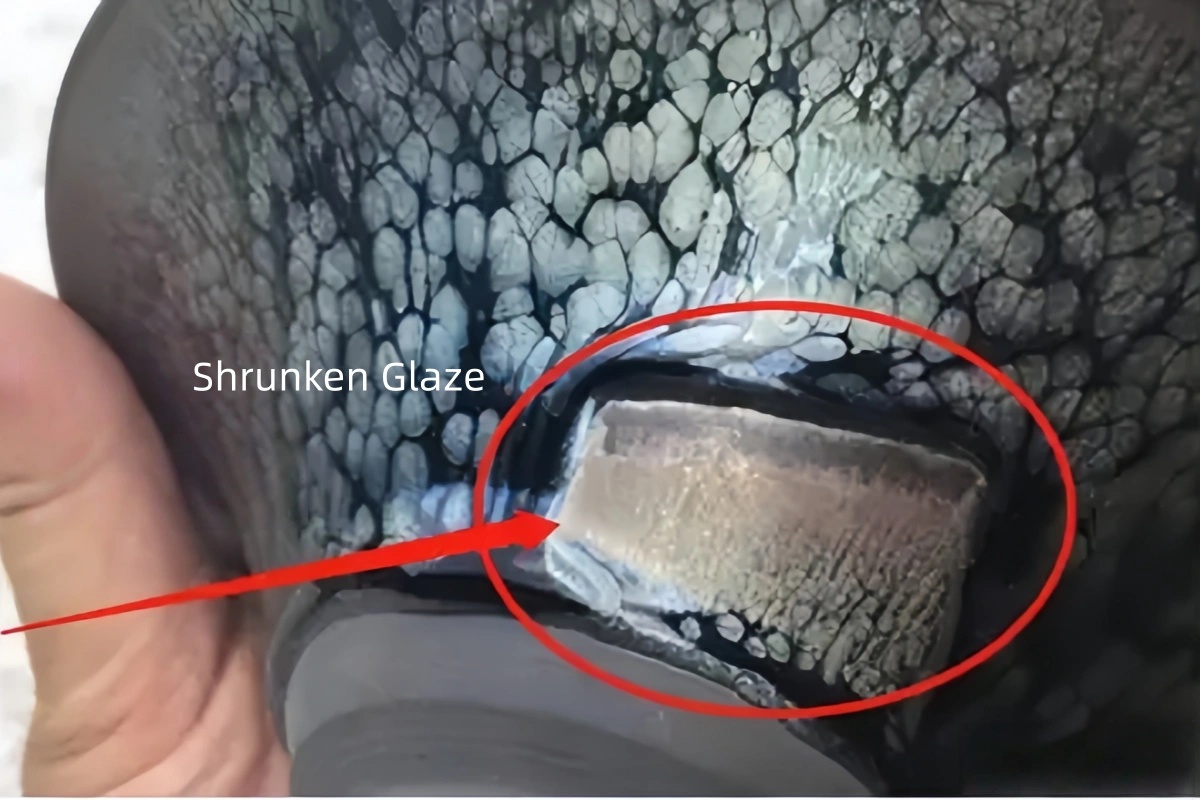
Shrunken Glaze: Areas where the glaze is missing because it receded or cracked during firing. Traditionally, this is a major flaw.
Glaze Skipping: Tiny, unglazed spots caused by dust or grit on the body before glazing. If minimal and not affecting aesthetics, this is generally acceptable.
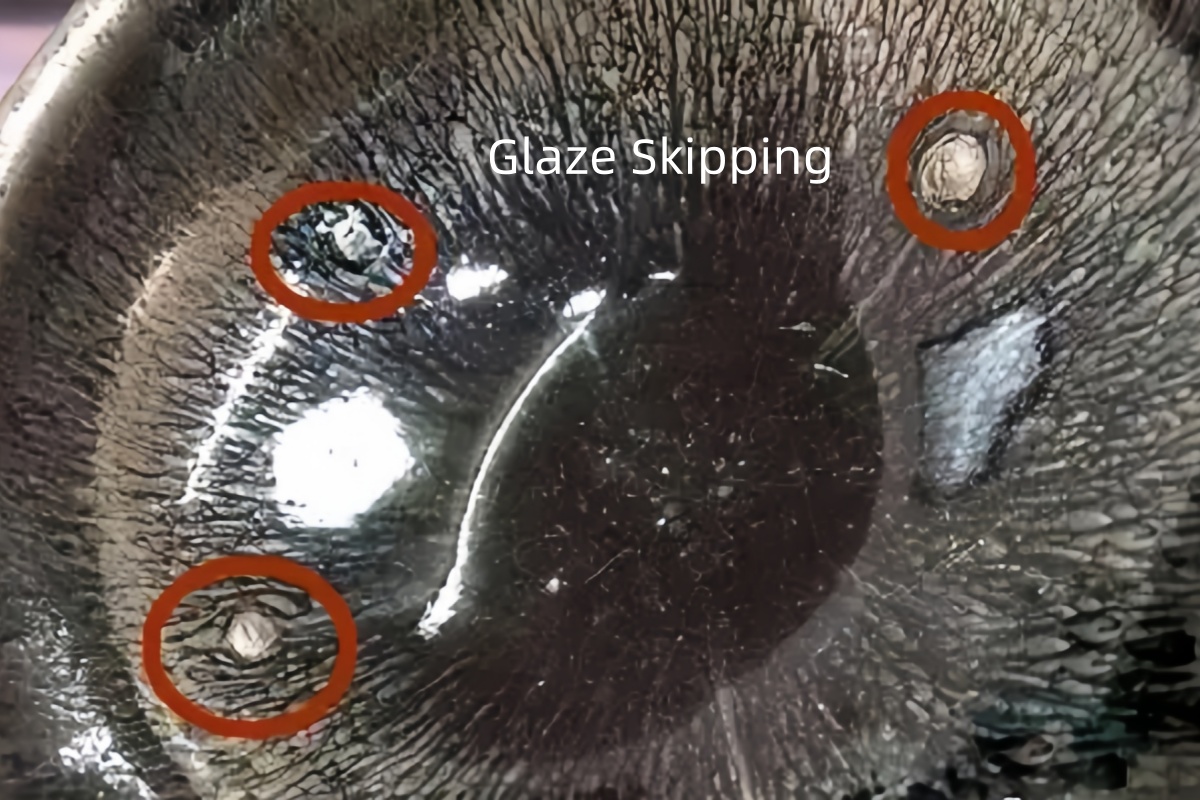
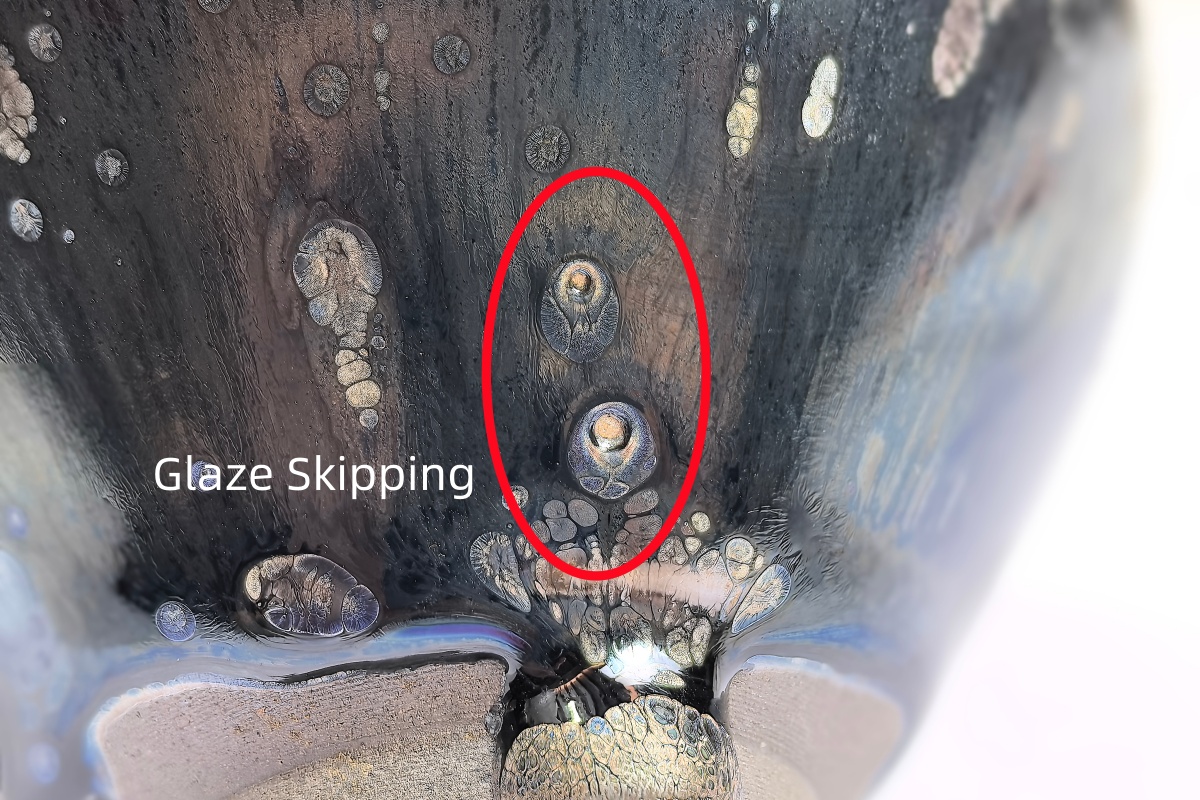
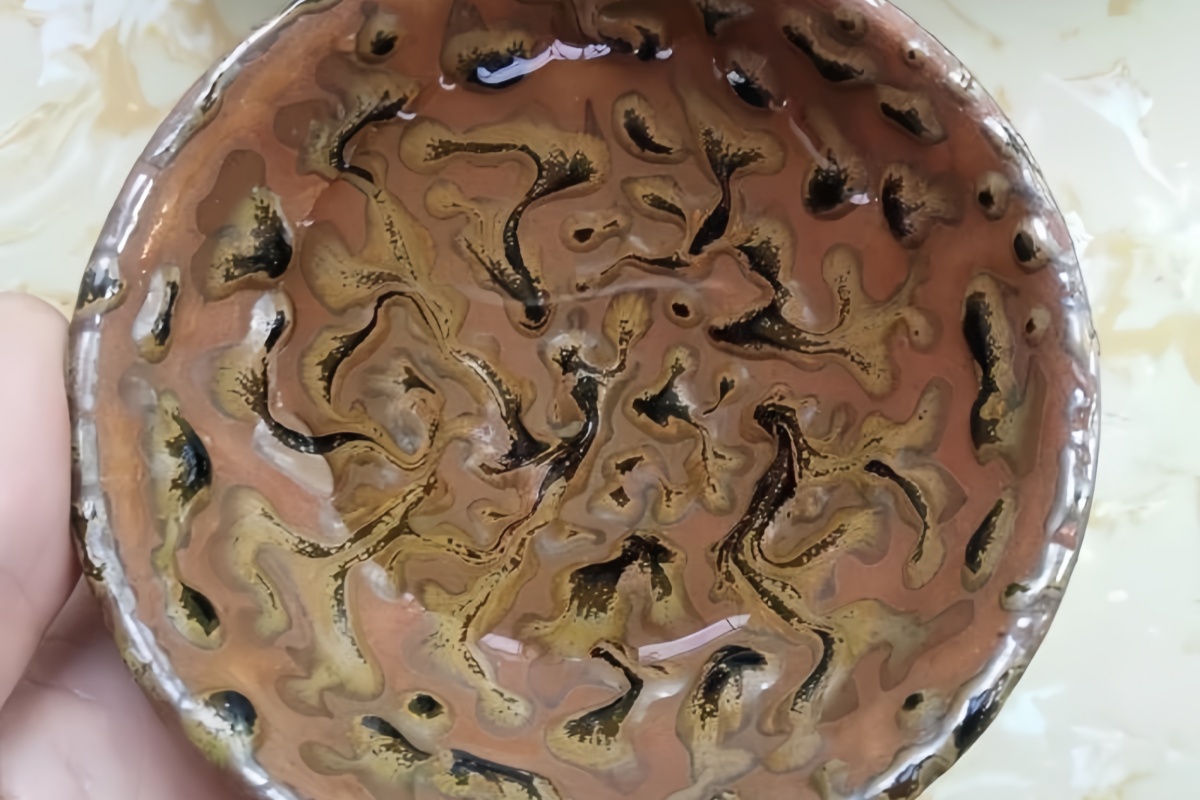
However, some artisans now intentionally create this effect, producing pieces known as "Tea Tree Jian Zhan", where it becomes a distinctive style, not a defect.
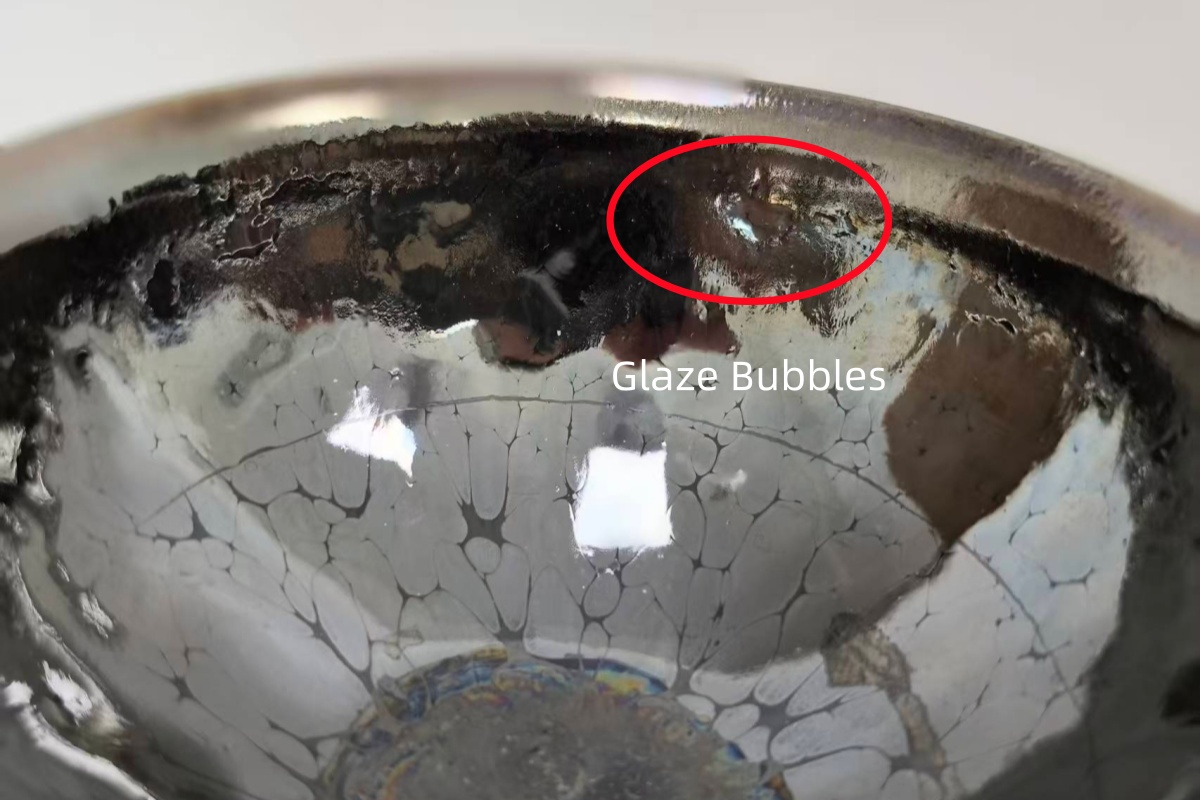
Glaze Bubbles: Bubbles or blisters on the surface that compromise smoothness. If the edges are sharp or raised, it's considered a major flaw.
Pinholes / Pores: Small holes or pores in the glaze.
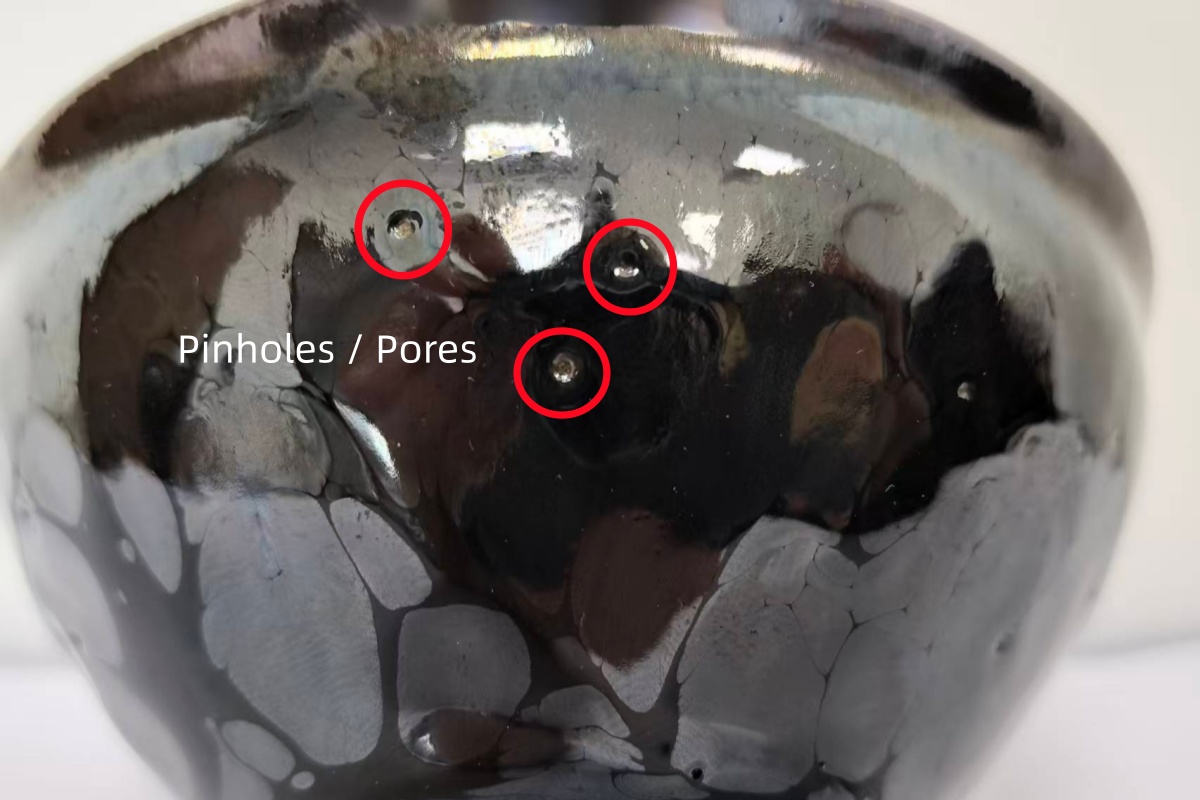
The iron-rich clay contains residual quartz sand, which can prevent the glaze from adhering perfectly, resulting in these tiny pits. While artisans strive to minimize them, completely eliminating pinholes—especially in well-vitrified pieces—is nearly impossible. A few, very small pinholes are not considered flaws and are part of the character of Jian Zhan, as the saying goes, "No pores, no Jian Zhan; no Jian Zhan, no pores".
Cracked Glaze / Orange Peel Glaze: Both are significant firing defects.
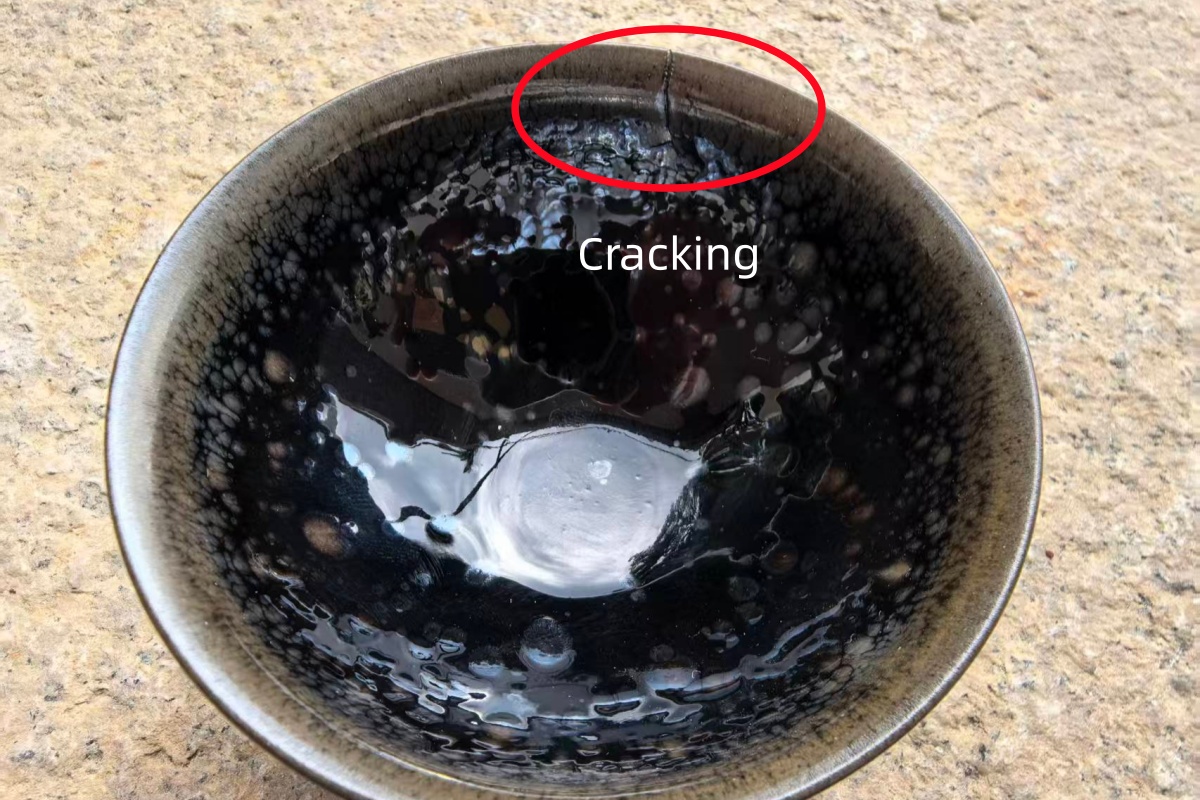
Cracked Glaze : Also called "burst glaze," this shows as sharp cracks or craters in the surface, which feel rough to the touch.
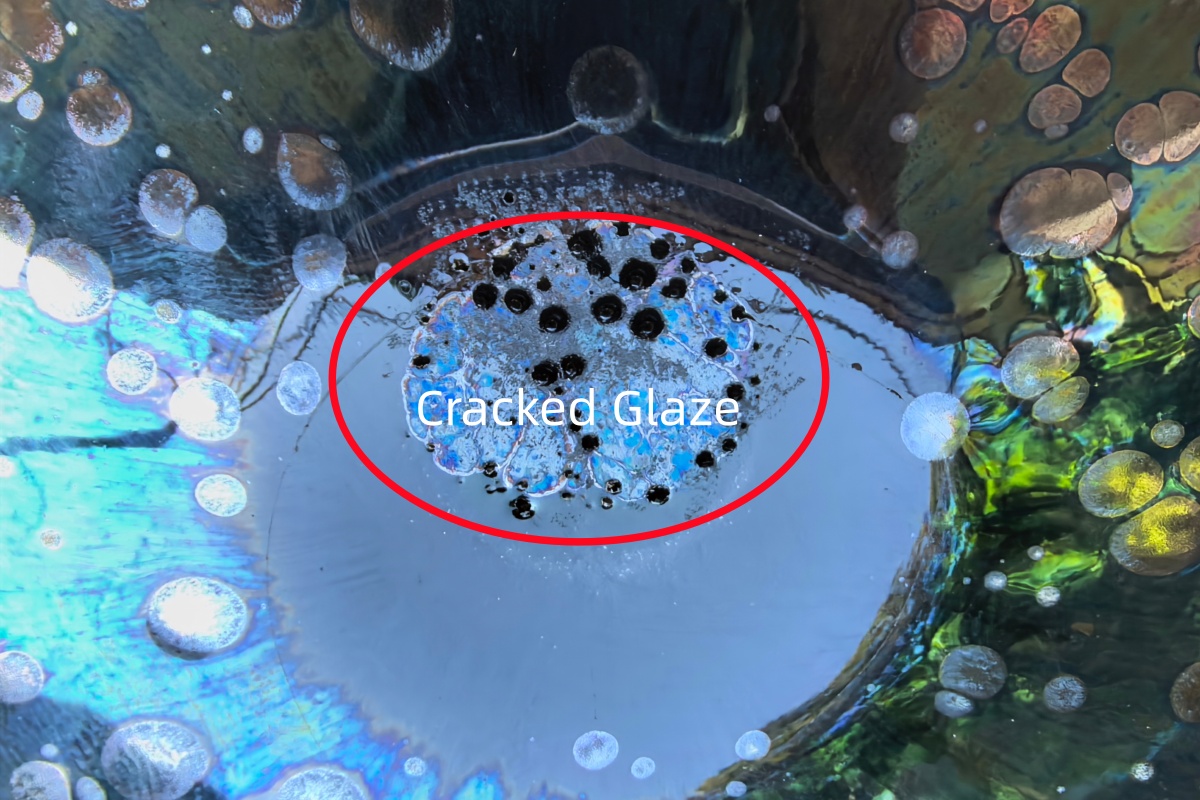
Orange Peel Glaze : The surface has a texture resembling orange peel—uneven, bumpy, and lacking the typical lustrous finish.
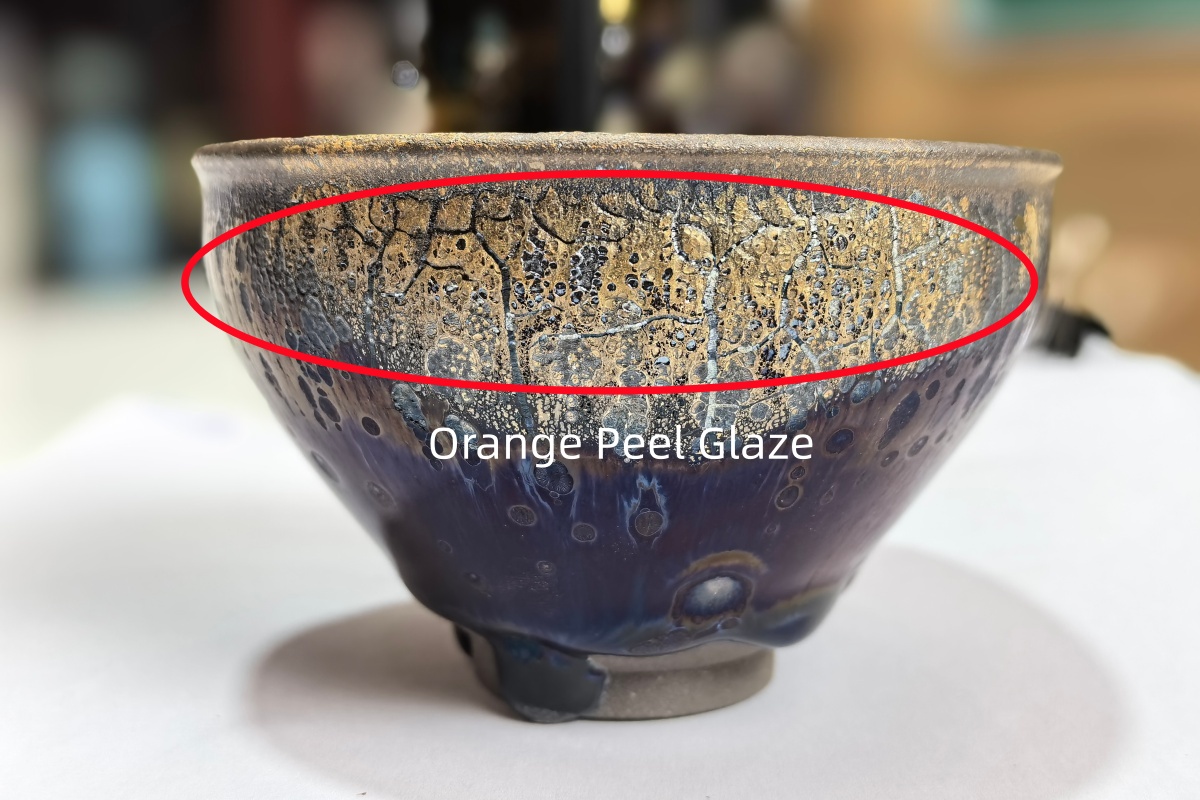
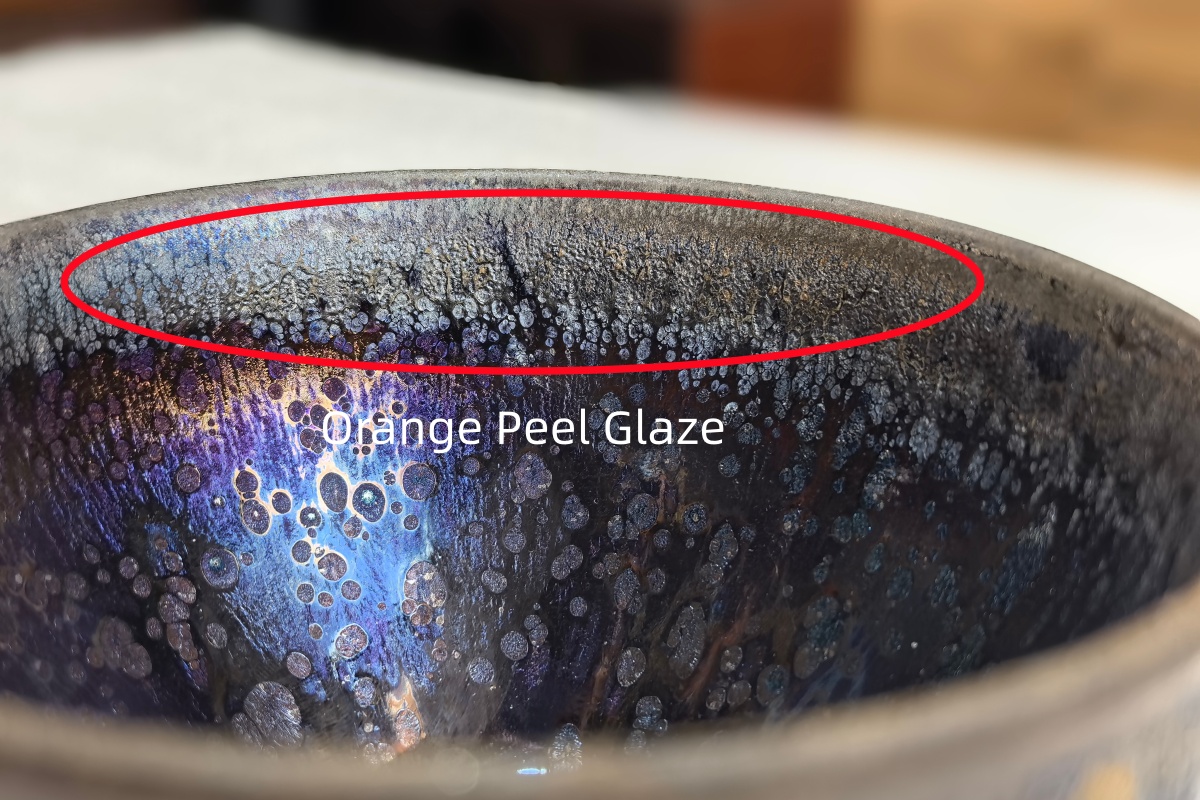
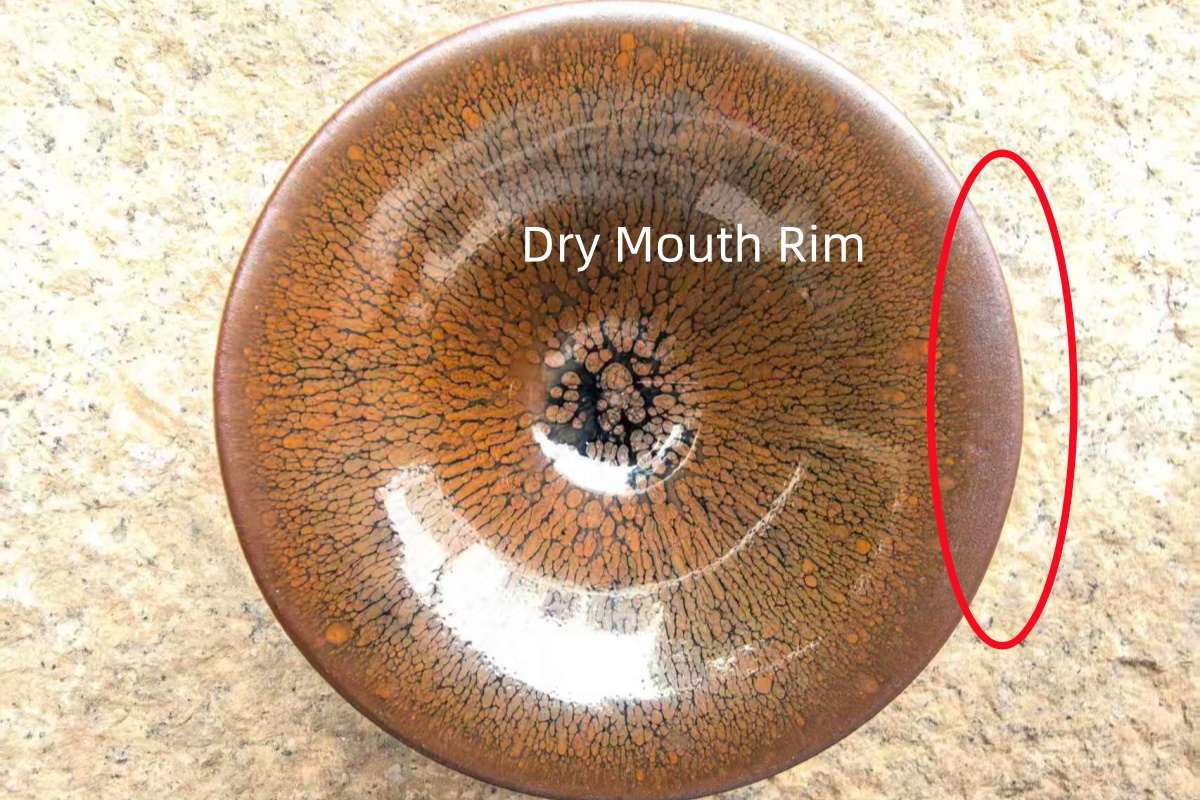
Note: Dry Mouth Rim vs. Glaze Defects: A "Dry Mouth Rim" is a fundamental and universal characteristic of Jian Zhan, often called its "identity card." It is not a flaw. During firing, the glaze flows downward, leaving the rim thinly coated or even exposing the dark clay body. This creates a dry, slightly rough feel along the rim and is an unavoidable result of the firing process.
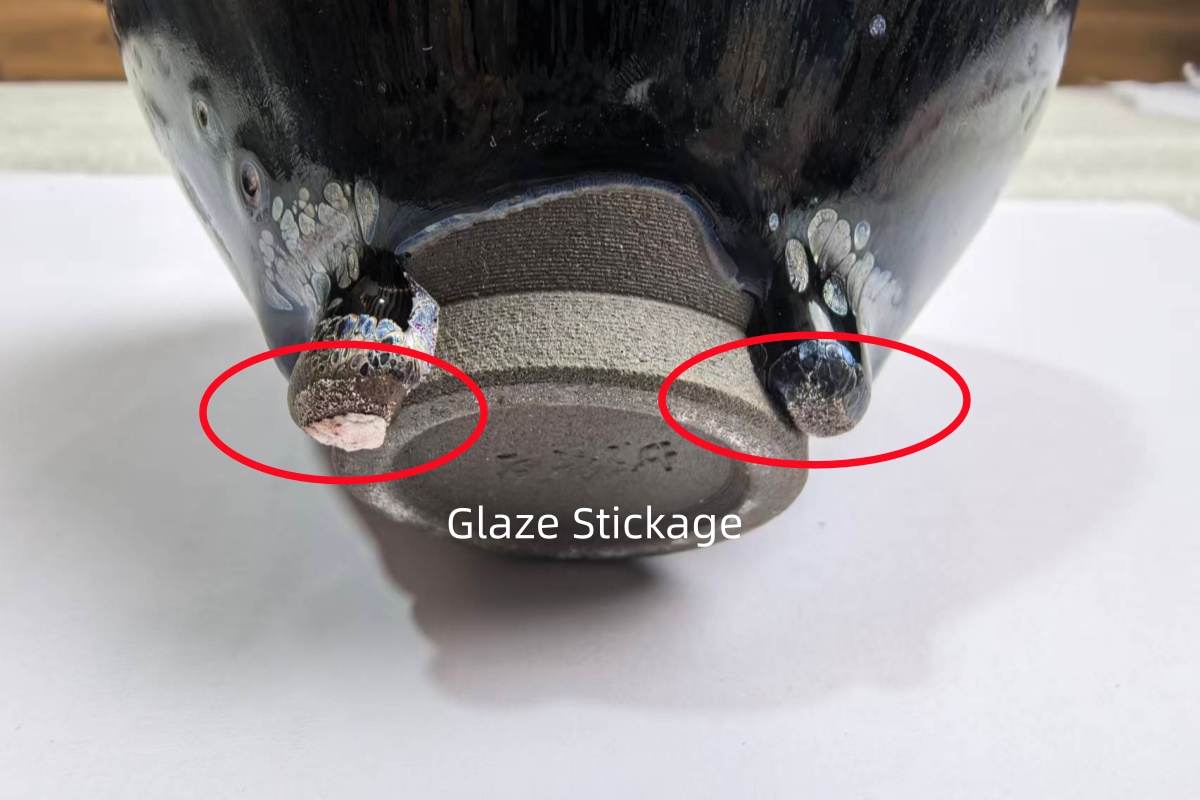
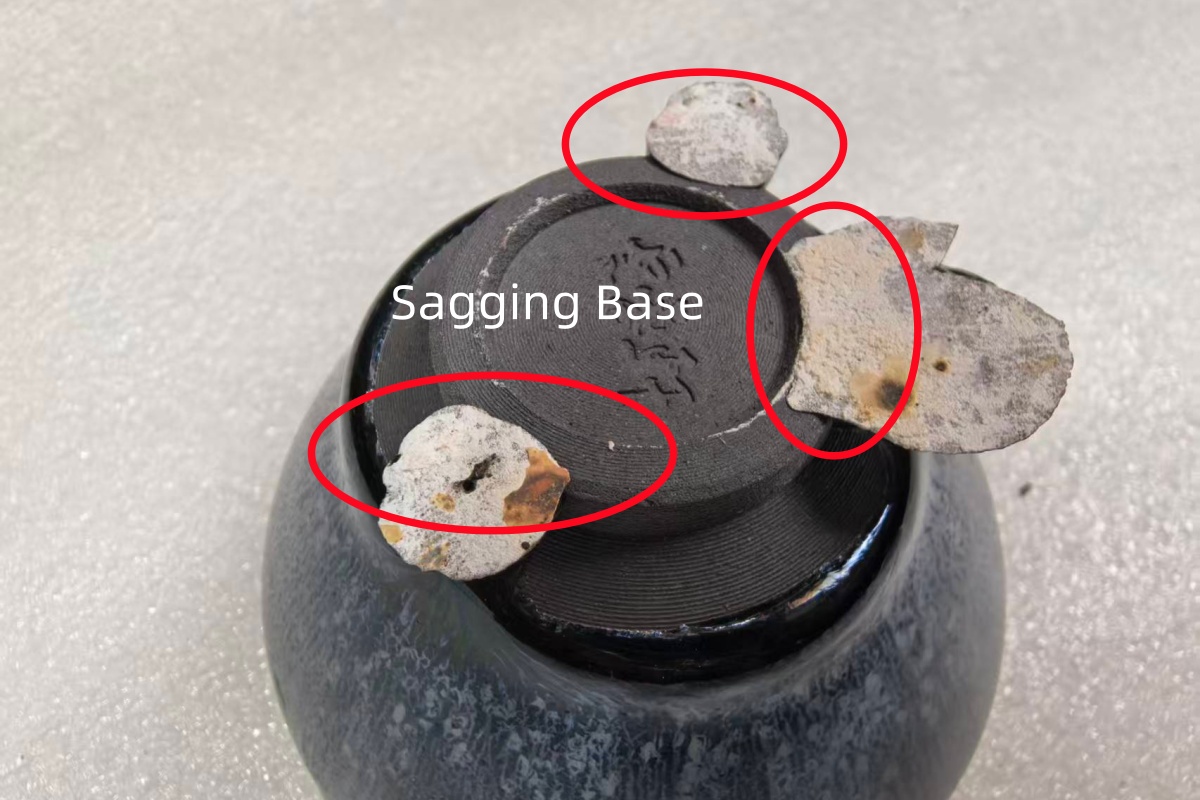
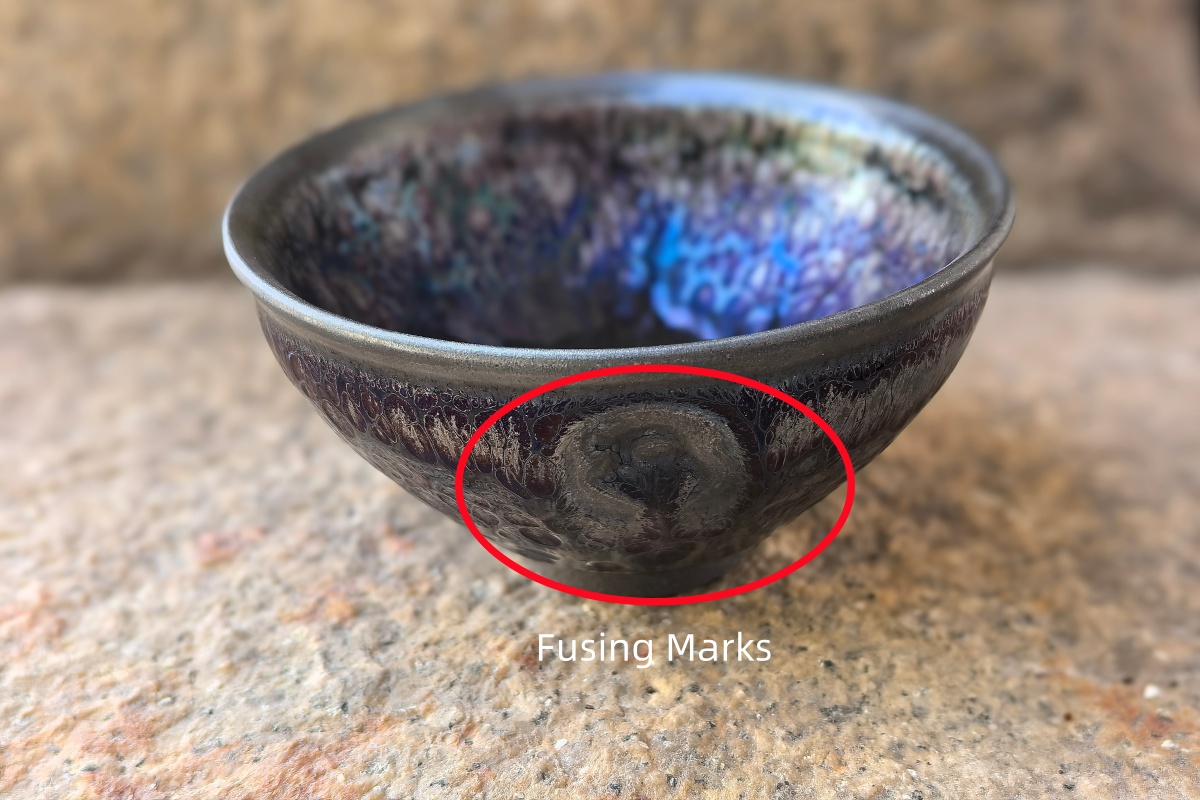
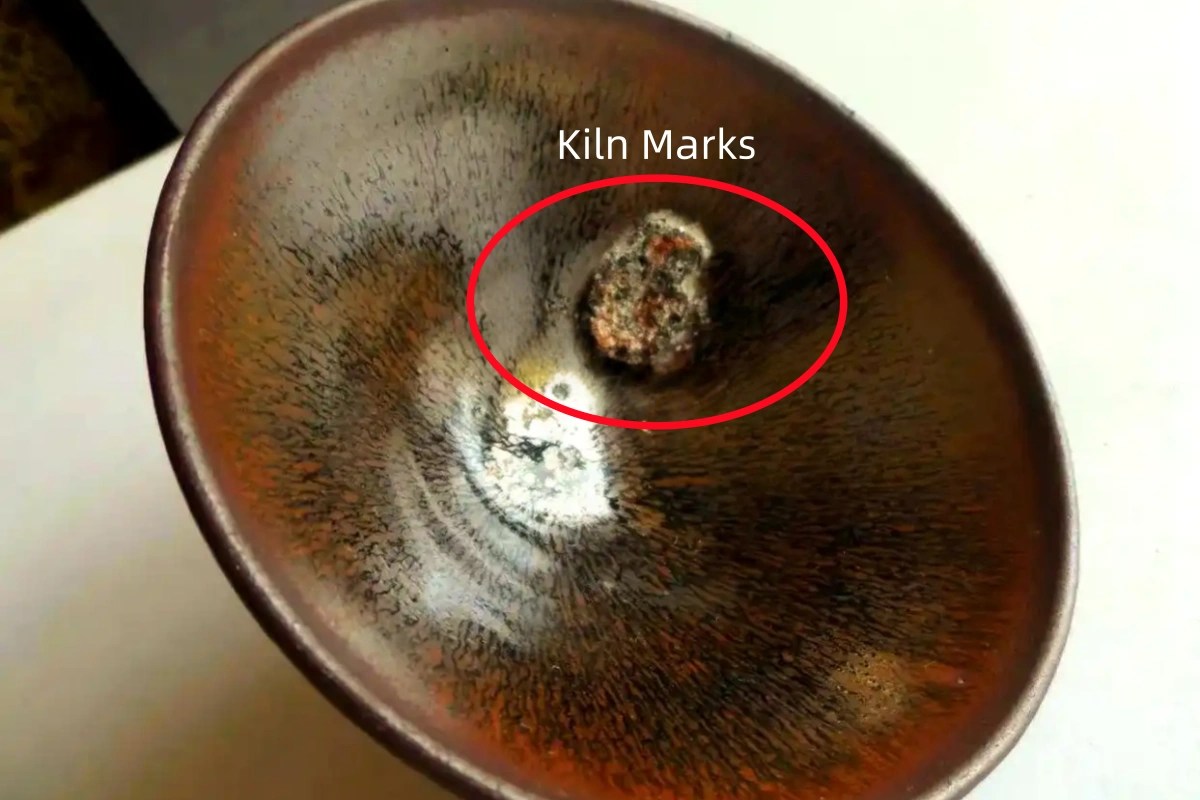
Glaze Stickage or Sagging Base: A serious structural defect where the piece fuses to the kiln furniture (e.g., kiln spurs) during firing, or kiln residue (like sand) is stuck to the base. This compromises the ware's integrity and typically renders it unsalvageable.
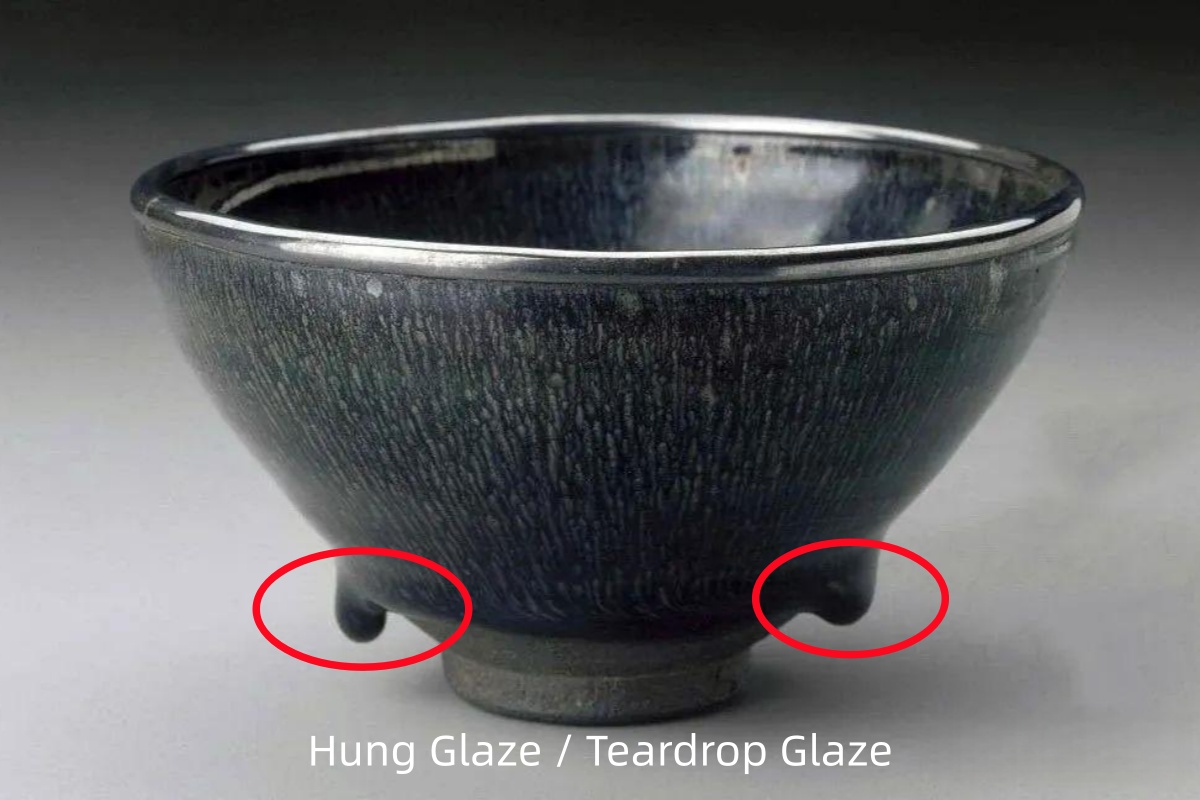
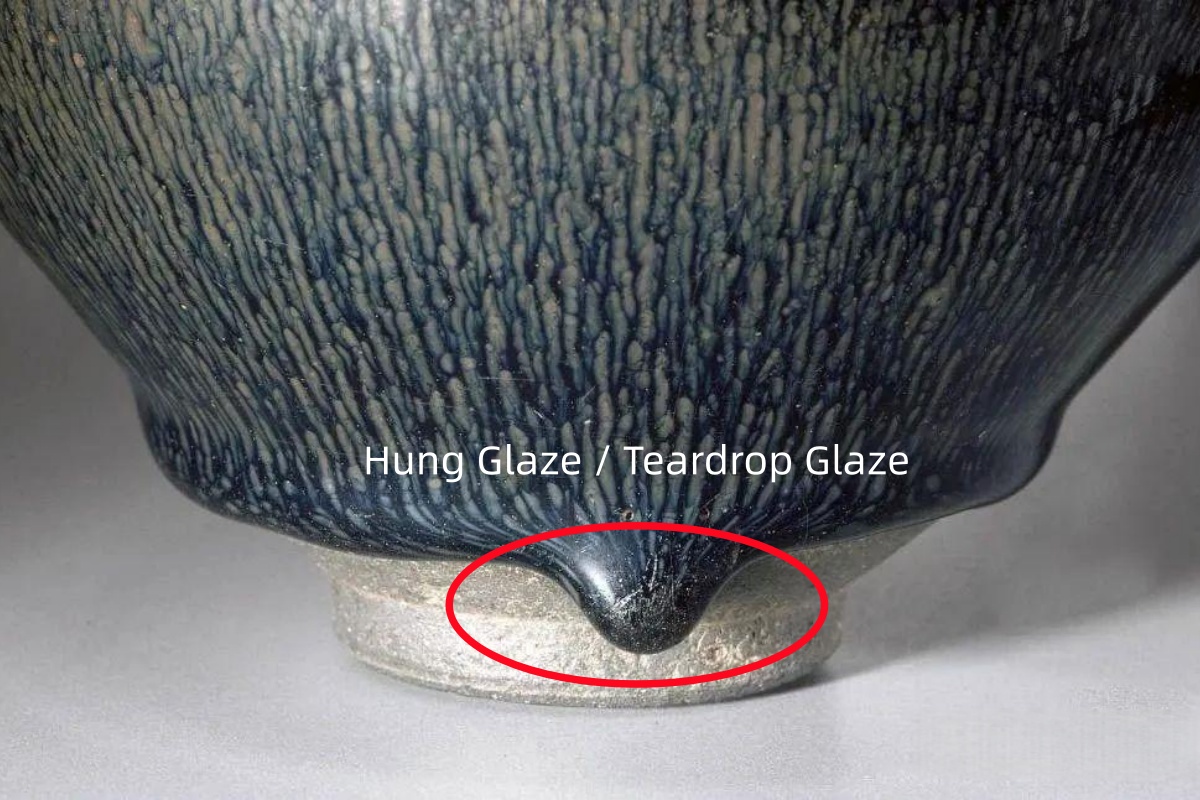
Note: Hung Glaze / Teardrop Glaze: This is a desirable effect, not a flaw. It occurs when glaze gathers at the bottom edge but doesn't drip off, forming solidified droplets. Perfectly formed "teardrops" are a sign of skilled firing, adding depth and dynamic beauty to the piece.
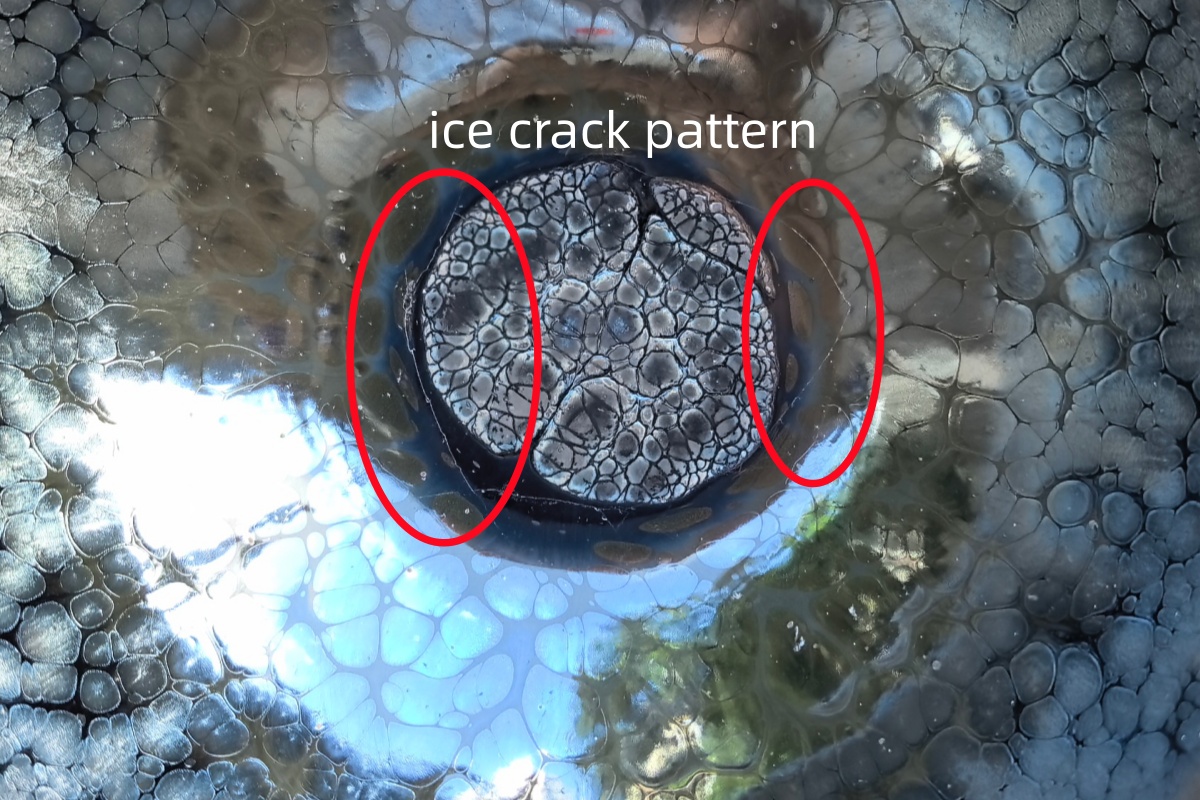
Crazing : The natural crackling of the glaze surface. This is not a flaw but is often intentionally cultivated as a decorative feature, known as "crackle glaze" or "ice crack pattern" . Crazing can appear in various colors and patterns and may develop right out of the kiln or over time.
II. Body Deformation
This refers to the finished piece deviating from its intended shape.
Out-of-Round : The mouth or body of the cup is not perfectly circular, caused by the high-iron clay softening and warping at temperatures exceeding 1300°C.
Cracking : Cracks in the clay body or glaze.
Chipping/Breakage: Localized damage from impact.
Fusing Marks / Kiln Marks: Holes or scars, often from impurities fusing to the piece during firing. This is more common in wood-fired Jian Zhan where the ware might stick to the saggar.
III. A Guide to Selecting Jian Zhan
When choosing a Jian Zhan, don't seek absolute perfection. We recommend this approach:
Check the Shape: Ensure the piece is reasonably symmetrical without significant warping.
Evaluate the Glaze: Look for a lively, lustrous glaze with a pattern you enjoy.
Identify Major Flaws: Rule out significant issues like large cracks or a stuck base.
Appreciate Natural Character: Learn to accept non-structural features like minor pinholes as part of the ware's handmade charm.
We hope this guide helps you appreciate the unique beauty of Jian Zhan.