
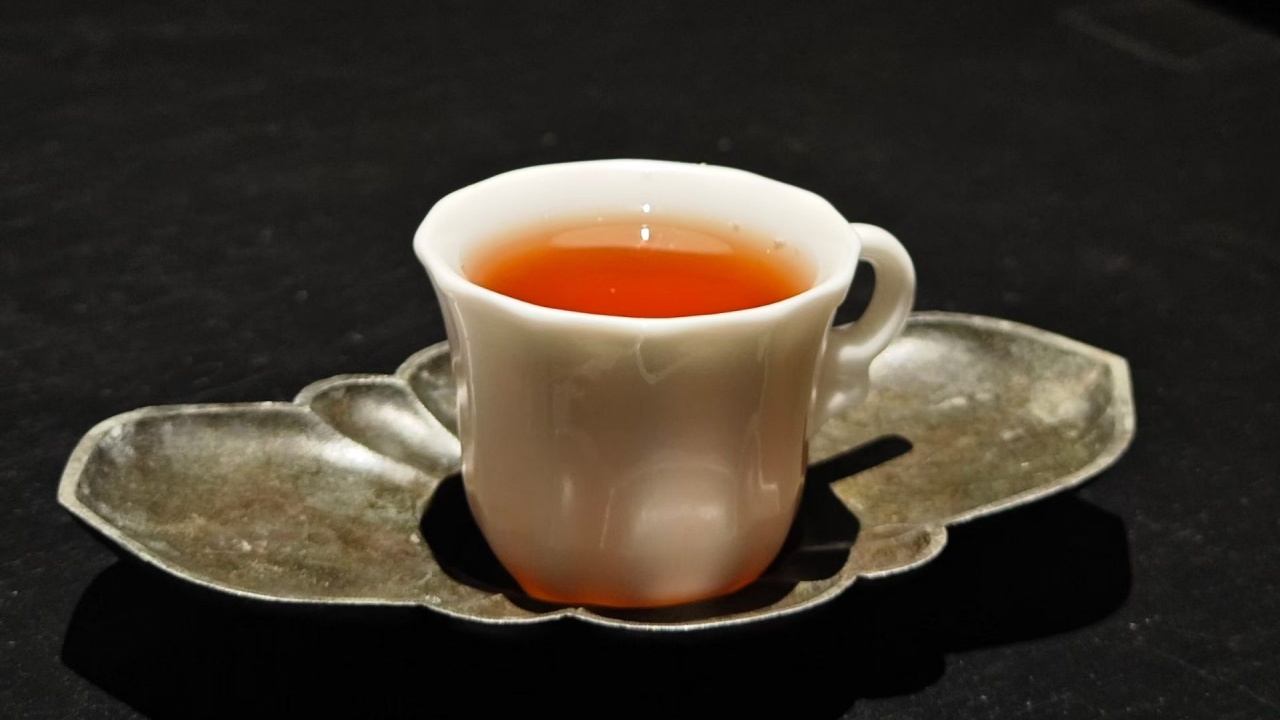
Before exploring the health benefits of black tea, let us first examine its physicochemical composition.


— Mental Alertness & Fatigue Relief
The caffeine in black tea stimulates the cerebral cortex, exciting the central nervous system to enhance mental focus, sharpen cognitive responses, and improve memory.
It also invigorates the cardiovascular system by increasing heart rate, promoting blood circulation, accelerating metabolism, and thereby relieving fatigue.
— Quenching Thirst & Diuretic Effect
Amino acids in black tea impart a fresh, sweet flavor and form complexes with caffeine, resulting in a refreshing and mellow taste. Polyphenols, sugars, amino acids, and pectin in the tea interact with saliva, stimulating its secretion and creating a cooling sensation that relieves thirst.
Meanwhile, caffeine and aromatic compounds work together to enhance kidney function, increasing urine output and facilitating the elimination of uric acid, excess salts, and other harmful substances to maintain physiological balance.

— Anti-Inflammatory & Bactericidal Properties
Rich in polyphenolic compounds, black tea exhibits anti-inflammatory effects. Additionally, catechins bind to single-cell bacteria, causing proteins to coagulate and precipitate, thereby inhibiting and eliminating pathogens. This makes black tea beneficial for alleviating conditions like bacterial dysentery and food poisoning.
— Strengthening Bones & Preventing Cavities
Polyphenols in black tea suppress substances that break down bone cells. To prevent osteoporosis—commonly seen in women—experts recommend drinking a cup of black tea daily over several years for noticeable effects.
The abundant fluoride in black tea combines with calcium in teeth, reinforcing enamel and enhancing resistance to cavities. Gargling with black tea can also help prevent tooth decay and colds caused by filterable viruses.

— Warming the Stomach & Dispelling Cold
As a fully fermented tea, black tea undergoes enzymatic oxidation where tea polyphenols are converted into theaflavins and thearubigins. These oxidized compounds help reduce inflammation, protect the gastric mucosa, generate warmth in the stomach, and aid digestion.
— Preventing Cardiovascular Diseases
A U.S. medical study found that drinking four cups of black tea daily can improve vascular dilation from 6% to 10% in heart disease patients. The flavonoids in black tea act as antioxidants, helping prevent strokes and heart disease.
Another U.S. study showed that daily black tea drinkers have a 40% lower risk of heart attack compared to non-drinkers. Research from Osaka City University confirmed that blood flow velocity through heart arteries improves within an hour of drinking black tea, demonstrating its strong potential in preventing myocardial infarction.
— Lowering Lipids, Blood Sugar & Blood Pressure
Catechins in black tea help break down lipids and promote their excretion, reducing cholesterol absorption and maintaining healthy levels. They also inhibit the formation of angiotensin, contributing to normalized blood pressure and improved vascular elasticity and resilience.
— Parkinson’s Disease Prevention
Researchers suggest that enzymes in black tea may help prevent Parkinson’s disease. A study by Singapore’s National University of Singapore and National Neuroscience Institute surveyed 63,000 residents aged 45–74 and found that those who drank at least 2–3 cups of black tea per month had a lower risk of developing Parkinson’s than the general population.

— Antiviral Effects
In 2016, researchers from the Shizuoka Institute of Environment and Hygiene Sciences in Japan confirmed that theaflavins in black tea possess antiviral properties, effectively inactivating human caliciviruses such as norovirus.
This finding holds promise for preventing foodborne illnesses. Known as "soft gold" in tea, theaflavins are particularly abundant in varieties like Jin Jun Mei, which is produced using innovative techniques that yield a golden liquor and enhanced efficacy.
