

Heavy metal contamination, particularly lead, has become a growing public concern. Even low-level exposure to lead is hazardous, especially for children, and has been linked to developmental delays, learning difficulties, and behavioral issues. In adults, long-term exposure can lead to hypertension, kidney damage, and neurological disorders.
Tea is one of the world's most beloved beverages, enjoyed daily by billions for its comforting and rejuvenating qualities. Now, emerging research suggests that your daily cup of tea may offer an unexpected health benefit—reducing harmful heavy metals in drinking water.
A recent study by researchers at Northwestern University, published in ACS Food Science & Technology under the title “Brewing Clean Water: The Metal-Remediating Benefits of Tea Preparation,” reveals that:
tea leaves—especially black tea—can adsorb heavy metal ions from water during brewing. Higher brewing temperatures were found to enhance this adsorption effect.
In the study, tea leaves were added to purified water spiked with metal ions. After 24 hours, the tea residue was filtered out, and metal ion concentrations were measured before and after adsorption to determine the extent of metal uptake.
The team compared various types of tea, including black, white, green, oolong, rooibos, and Lipton tea. Results showed that black and green teas were most effective at absorbing lead from water. Chamomile, due to its distinct floral structure, exhibited lower adsorption capacity.
Compared with whole leaves, ground tea leaves offered a larger surface area and improved metal uptake. The material of tea bags also influenced performance: nylon and cotton tea bags showed lower adsorption, while cellulose-based bags performed better.
Adsorption experiments with different metal ions indicated that tea's ability to absorb heavy metals increased with atomic mass, following the order: Cr(VI) < Cu < Zn < Cd < Pb.
The adsorption performance remained relatively stable within a pH range of 4–10, and tea leaves showed similar effectiveness in both tap and deionized water.
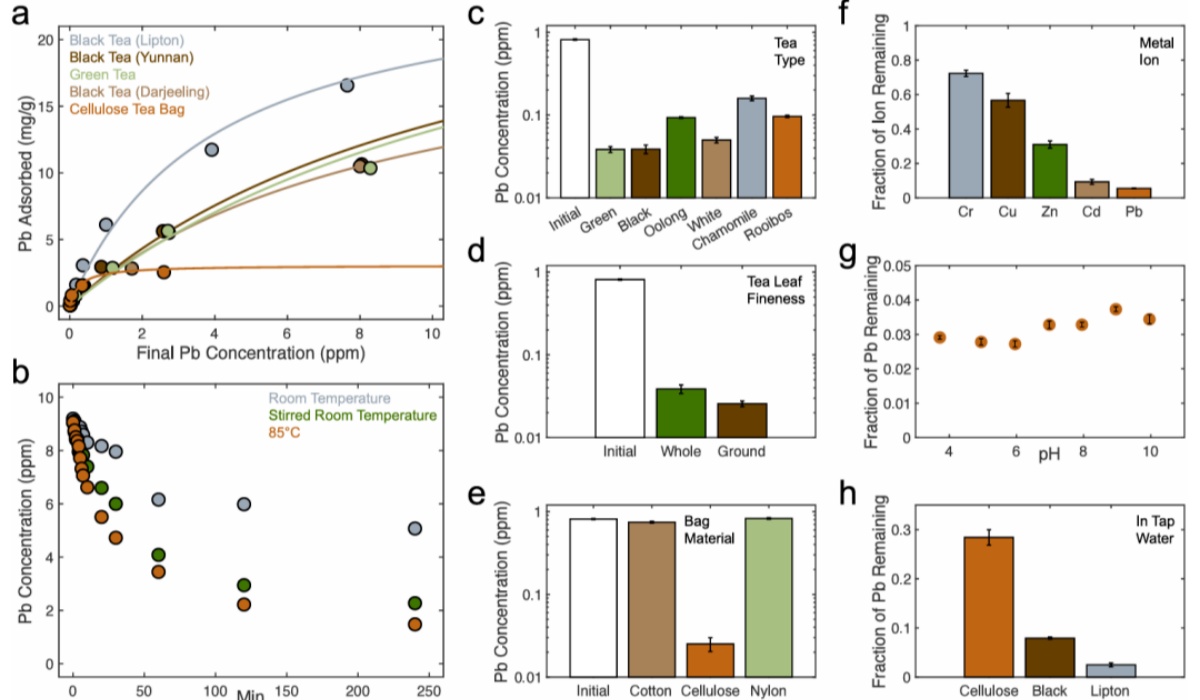
Comparison of Heavy Metal Adsorption Performance Among Different Teas
Scanning electron microscopy (SEM) images revealed differences in leaf surface structure among tea types. For instance, white tea surfaces were smooth, whereas black tea leaves showed more wrinkles—potentially increasing adsorption area.
Energy Dispersive Spectroscopy (EDS) confirmed the adsorption of lead on the tea leaf surface.
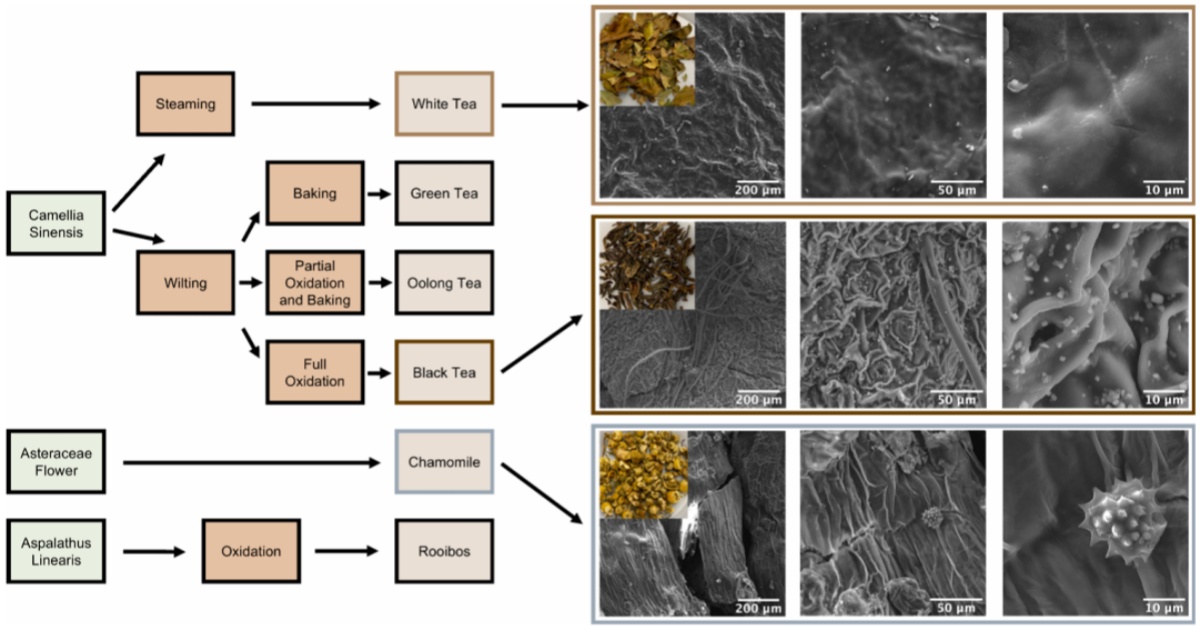
Production Processes and Surface Microstructures of Different Teas Under Scanning Electron Microscopy
The metal-adsorption effect was also influenced by brewing time and temperature. Longer brewing times allowed more contact between tea leaves and metal ions, improving removal rates.
Higher water temperatures accelerated the process, enhancing adsorption efficiency in a shorter time.
However, extended brewing is not always better—overbrewing can make the tea overly strong, affecting its flavor and taste.
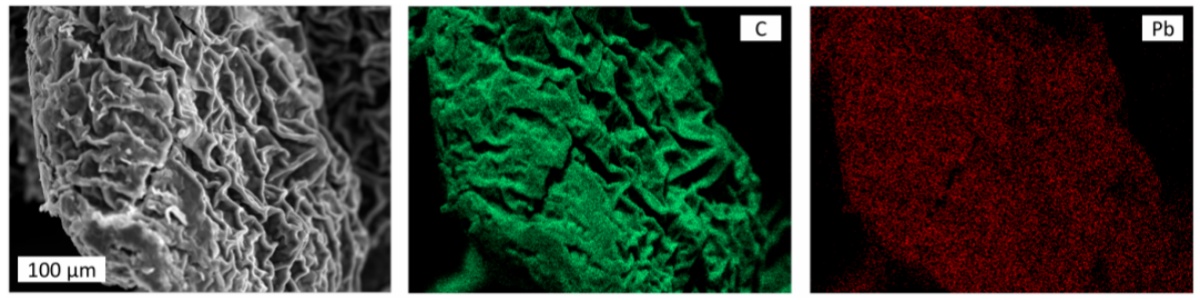 Adsorption of Lead on Tea Leaf Surfaces
This study highlights a potential additional health benefit of regular tea consumption. In areas with significant heavy metal pollution, drinking tea may help reduce residents’ exposure to harmful metals.
That said, it’s important to note that tea's adsorption capacity is not a substitute for professional water purification systems.
For heavily contaminated water sources, specialized water treatment remains essential to ensure safe drinking water.